
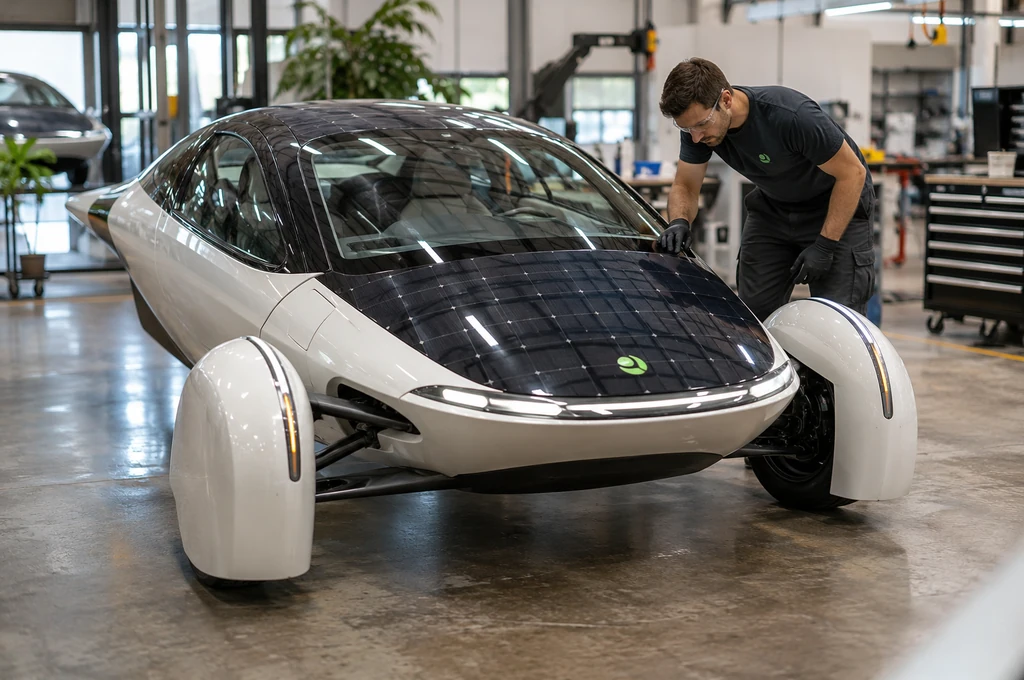
The Aptera solar EV has transitioned from an ambitious engineering concept into a finished vehicle assembled for an initial customer. That milestone represents a rare technical achievement in modern automotive manufacturing. Converting tens of thousands of soft preorders into paid customer deliveries presents a much harder financial hurdle.
⚡ Quick AI Overview & Key Recommendation
Aptera has assembled its first customer-intent solar electric vehicle, validating ultra-low drag aerodynamics and up to 40 miles of daily solar gain. Buyers prioritizing pure energy independence and short commutes should maintain their reservations, while high-mileage drivers should watch factory tooling progress closely before finalizing purchase contracts.
Solar mobility operates on strict physics. Most mainstream automakers abandoned onboard solar panels because heavy passenger frames consume more power than roof cells generate. Aptera took the opposite path. The company designed a three-wheeled composite aerodynamic shell that cuts drag to historic lows. As reporting from techeblog[dot]com and theevreport[dot]com confirmed, the company completed its first vehicle built for an actual customer after years of design revisions. Financial analysts writing on securities[dot]com rightly question whether reservation deposits can survive the transition to mass factory tooling.
Aptera Solar EV: Quick Comparison & Key Specifications
Evaluating solar-assisted transport requires looking at efficiency metrics rather than just raw pack capacity. Integrating photovoltaic cells directly into the vehicle surface changes how drivers calculate operating costs. The table below outlines how the production-ready Aptera compares to other solar-integrated concepts and lightweight efficiency benchmarks.
| Model | Price Range | Real Range | Battery Capacity | Fast Charging Time | Best For |
|---|---|---|---|---|---|
| Aptera Launch Edition | $30,700 – $39,200 | 400 miles + 40 mi solar/day | 42 kWh | 57 kW DC (20-80% in 35 min) | Zero-grid daily commuting |
| Lightyear 2 (Development Target) | ~$43,000 (Target) | 500 miles + 25 mi solar/day | 60 kWh | 150 kW DC (20-80% in 25 min) | Family highway driving |
| Standard EV + Solar Canopy Setup | $42,000 – $55,000 | 260 – 310 miles | 60 – 75 kWh | 150 kW DC (20-80% in 22 min) | Standard garage utility |
The numbers demonstrate why the Aptera solar EV stands apart from standard battery-electric cars. It uses roughly one-third of the energy a traditional compact electric sedan burns per mile. While conventional vehicle owners frequently evaluate the Solar Panel Charge Canopy Market Expands at 9.1% CAGR as Commercial Sites Turn to Clean Power to clean their fleet consumption, Aptera absorbs sunlight directly while parked on the street.
Top Ranked Models: In-Depth Reviews & Real-World Performance
True solar mobility remains an exclusive niche. Capital shortages forced several European competitors out of business, leaving few functional designs near production status.
1. Aptera Launch Edition (Production Spec)
The Aptera Launch Edition uses three in-wheel hub motors and an ultra-light composite body shell built in partnership with Italian carbon specialists. Its drag coefficient sits at a staggering 0.13. That aerodynamic efficiency allows approximately 700 watts of embedded solar cells to yield meaningful range gains.
- Solar Output: Up to 40 miles of free driving range per day under ideal sun exposure.
- Acceleration: Zero to 60 mph in 4.0 seconds with all-wheel drive.
- Pros: Virtually free local driving in sunny climates; unmatched efficiency of under 100 Wh/mile.
- Cons: Two-seat cabin configuration; three-wheel classification limits mainstream market appeal.
- Recommendation: Best suited for commuters who park outdoors in high-sun regions and demand minimum energy dependence.
Financial filings logged through regulatory channels such as the U.S. Securities and Exchange Commission reveal that capital expenditure remains Aptera’s central test. Building one vehicle by hand proves the concept works. Stamping and curing thousands of carbon bodies at scale requires sustained liquidity. Industrial analysts at Bloomberg and Reuters frequently point out that automotive startups encounter their greatest mortality risk precisely during factory tooling installation.
2. Decentralized Solar Mobility Infrastructure Pairing
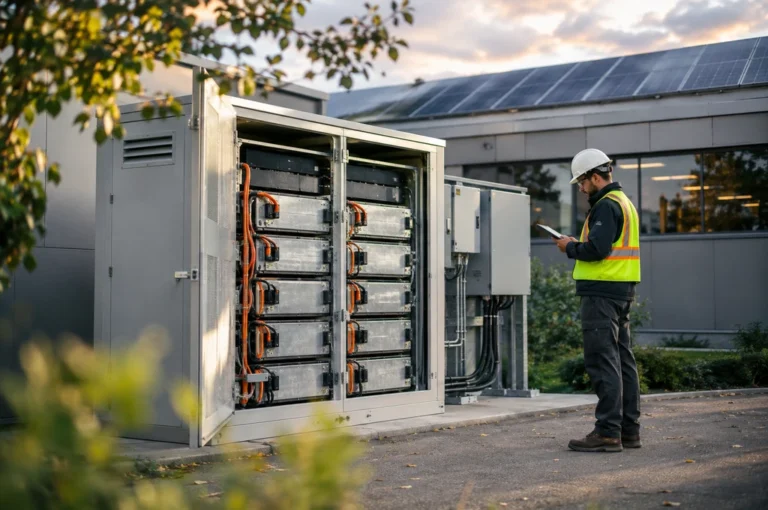
Instead of putting cells on moving vehicles, an alternative approach combines compact utility vehicles with regional microgrids. Academic breakthroughs like the NIT Rourkela Researchers Patent Solar-Powered Smart Microgrid To Make EV Charging Stations More Reliable show how stationary clean power supports vehicle fleets without adding weight to passenger compartments. For drivers needing four doors and conventional cargo layouts, paired stationary solar remains the practical alternative to onboard vehicle solar.
Customer Buying Guide: How to Choose the Right Model for Your Needs
Buying into early-stage solar transport requires clear analysis of your geography, driving routines, and tolerance for production delays. Here is how to assess whether an Aptera solar EV matches your daily routine.
First, evaluate your local solar irradiance. A driver in Southern California or Arizona captures the full 40 miles of daily solar gain easily. A driver in Seattle or Northern Europe during December might only harvest 8 to 12 miles. Determine whether your daily commute stays inside your harvest zone. If you travel 25 miles per day and leave the vehicle outside, you rarely need to connect to a wall socket.
Second, review home charging availability. The Aptera plugs into standard 120-volt household outlets and charges rapidly because the battery pack is compact. You do not need expensive panel upgrades. As highlighted by Investopedia in consumer energy studies, avoiding a dedicated Level 2 wall box installation saves up to $2,000 upfront.
Third, verify warranty terms on specialized composite body panels. Embedded solar cells experience continuous temperature cycling, vibrations, and road debris. Review the replacement cost of body sections before converting your initial reservation into a non-refundable order.
Frequently Asked Questions
How much range does the Aptera solar EV get purely from sunlight?
The vehicle generates up to 40 miles of driving range per day under direct sunlight. Actual generation depends heavily on seasonal UV intensity and cloud cover. In winter or cloudy climates, daily solar gains typically range between 10 and 20 miles.
How many reservations does Aptera currently hold?
Aptera reported over 45,000 reservation holders across retail and commercial buyers. However, reservations require only a small refundable deposit, so actual conversion rates will depend on final pricing and delivery timing.
Is the Aptera solar EV classified as a car?
In the United States, federal regulators classify the three-wheeled vehicle as an autocycle or motorcycle. This designation bypasses certain commercial passenger car crash tests, though Aptera designs the composite passenger cell to automotive safety standards.
What is the expected base price for the Aptera solar EV?
Base models with a 250-mile battery pack start around $30,700, while the Launch Edition with solar panels across all body sections sells for roughly $39,200. Final pricing remains subject to factory supply chain costs.
Can the Aptera solar EV charge at standard EV fast chargers?
Yes, production models include the North American Charging Standard connector. Drivers can connect to conventional DC fast chargers for highway road trips, gaining roughly 200 miles of range in 35 minutes.
How does weather impact the composite solar panels?
Aptera seals its solar cells inside durable resin composites to withstand hail and road debris. Extreme heat slightly lowers cell efficiency, while snow cover halts solar harvesting until the surface clears.
Does Aptera have enough funding to fulfill all preorders?
The company relies on continuous investor funding, state manufacturing grants, and community equity rounds to finance assembly tooling. Scaling to volume production requires substantial additional capital before all reservations can be fulfilled.
How does the drag coefficient compare to standard passenger EVs?
Aptera achieves an aerodynamic drag coefficient of 0.13, which is drastically lower than the 0.20 to 0.24 ratings typical of modern electric sedans. This low resistance lets the vehicle travel farther on far less battery capacity.
Can two adults travel comfortably with cargo in an Aptera?
Yes, the cabin seats two adults with 32 cubic feet of rear cargo space beneath the rear hatch. The elongated tail structure provides more luggage volume than many traditional compact passenger hatchbacks.
When will customer deliveries begin in large volumes?
Aptera has delivered initial validation vehicles to early community supporters while working toward full factory tooling. Volume output relies on the completion of automated manufacturing lines in California.
The Real Path Ahead for Aptera Solar EV Deliveries
Assembling an initial customer car confirms that hyper-efficient solar mobility works outside laboratory test tracks. Converting that momentum into thousands of completed deliveries requires disciplined capital management and stable supplier partnerships. For reservation holders, the Aptera solar EV remains the boldest clean energy vehicle concept on the horizon, but patience is necessary while assembly lines scale.
Source: Securities.io (securities[dot]io)