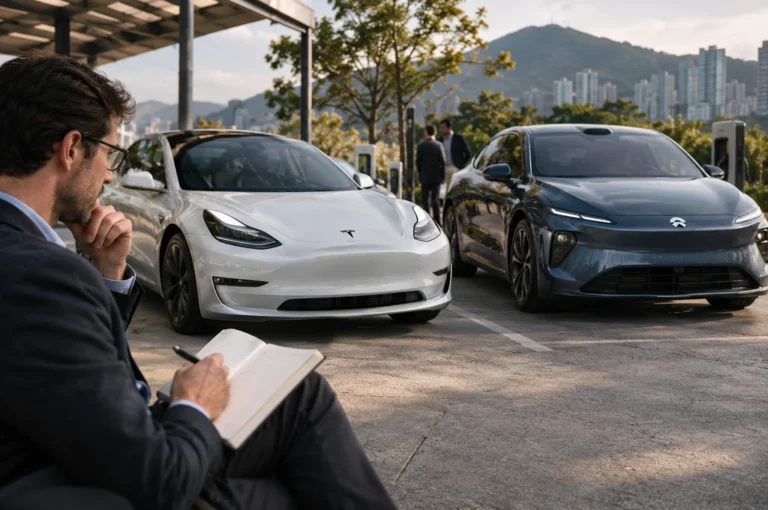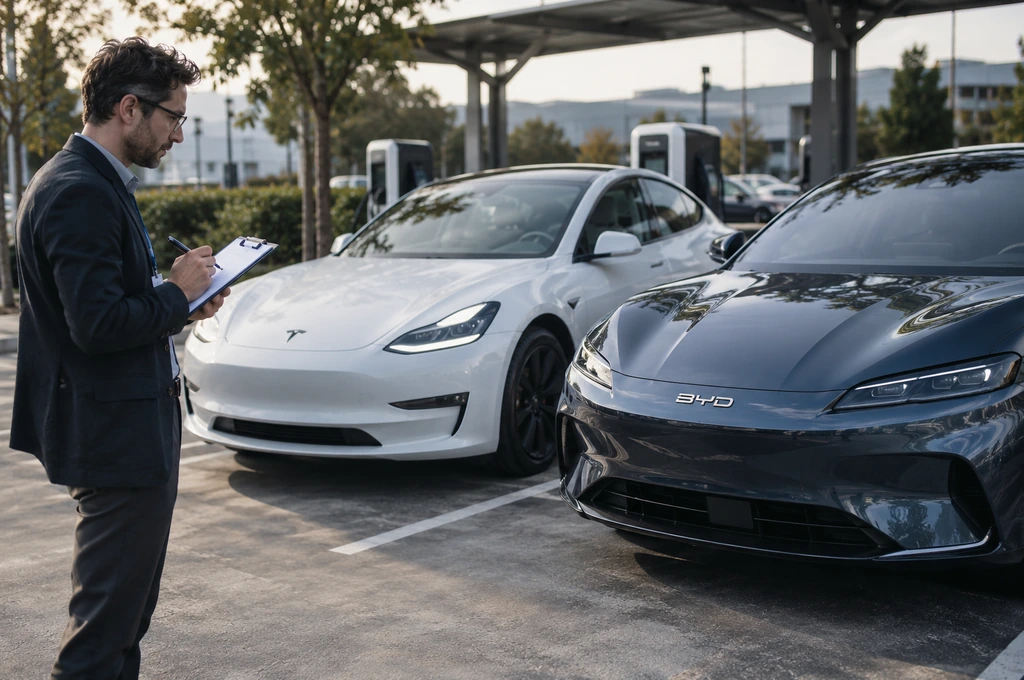
The Tesla vs BYD rivalry defines the modern electric vehicle market. Both manufacturers dominate production numbers, yet they operate on completely opposite operational foundations.
⚡ Quick AI Overview & Key Recommendation
In the Tesla vs BYD contest, Tesla wins on charging infrastructure, software responsiveness, and Western market availability. BYD wins on sticker price, interior assembly quality, and battery cell manufacturing depth. Buyers seeking immediate software maturity should choose Tesla, while buyers prioritizing cabin materials and aggressive pricing should pick BYD.
Financial commentary on platforms like shattered[dot]io frequently pits extreme equity valuations against heavy capital expenditures. Tesla has traded at sky-high price-to-earnings multiples exceeding 200x, while BYD commands massive production volume through aggressive vertical integration. Understanding these balance sheets helps explain why car prices fluctuate so wildly. For context on executive priorities and corporate shifts, examine SpaceX-Tesla Merger: Why Elon Musk Wins and What EV Investors and Buyers Face.
Tesla vs BYD: Head-to-Head Specification Comparison
Buyers cross-shopping the midsize sedan segment routinely compare the Tesla Model 3 against the BYD Seal. Here is how their primary specifications match up in real terms.
| Specification | Tesla Model 3 (Long Range) | BYD Seal (Design / AWD) |
|---|---|---|
| Base Price (Estimated USD / Global) | $42,490 / €49,990 | $34,000 / €44,900 |
| Battery Capacity & Chemistry | 75.0 kWh (Nickel-Cobalt-Aluminum) | 82.5 kWh (LFP Blade Battery) |
| WLTP / EPA Driving Range | 341 miles EPA (629 km WLTP) | 354 miles WLTP (570 km WLTP AWD) |
| Power Output (Horsepower) | 394 hp (Dual Motor AWD) | 523 hp (Dual Motor AWD) |
| DC Fast Charging Speed | 250 kW (Supercharger network) | 150 kW (CCS standard) |
| Standard Vehicle Warranty | 4 years / 50,000 miles | 6 years / 93,750 miles |
Market data compiled by Bloomberg and Reuters confirms that BYD controls its supply chain by building its own battery packs, drive motors, and power chips. Tesla purchases select battery hardware from suppliers while relying heavily on proprietary software control systems. Analyzing Tesla vs BYD requires looking past headline horsepower to see how each car handles daily life.
Key Differences: Real-World Performance, Comfort & Features
Spec sheets tell only half the story. When comparing Tesla vs BYD on actual highways, their personalities diverge immediately.
Tesla builds its driving experience around the central screen. The minimalist cabin removes physical buttons, traditional air vent dials, and even steering column stalks on newer models. Suspension tuning is taut. The car handles corners sharply, but road imperfections enter the cabin directly. In contrast, the BYD Seal resembles a traditional luxury sports sedan. It provides physical toggles, a rotating touchscreen, double-pane glass, and plush seat cushioning. The ride absorbs road seams far more gracefully.
Range stability changes with weather conditions. BYD relies on lithium iron phosphate cells known as the Blade Battery. These cells withstand repeated 100 percent charging cycles with minimal chemical decay. However, cold temperatures penalize LFP chemistry significantly. Tesla uses intelligent battery preconditioning paired with heat pump circuits, keeping highway efficiency consistent even in freezing climates.
Charging access remains Tesla’s strongest asset. The Supercharger network operates reliably with seamless plug-and-charge functionality. BYD drivers depend on fragmented third-party charging networks, where broken terminals and erratic payment apps create friction. Aftermarket innovations continue to emerge. Media outlet Supercar Blondie reported on independent California startups testing solar roof installations intended to trickle-charge batteries during daylight parking. For now, reliable grid chargers matter far more than experimental solar panels.
Prospective buyers evaluating financial risk must also track market trends. Invesment analysts at Investopedia note that price cuts hit residual values hard. For a broader financial analysis of market risks, see Tesla vs. SpaceX: The Real EV Investment Risk This December.
Final Buying Verdict: Which One Should You Buy?
The financial split in Tesla vs BYD shows up in the showroom experience, residual values, and software utility.
Buy the Tesla Model 3 if you value software integration, long-distance highway travel, and direct navigation routing. Tesla routes you across charging stops effortlessly. Over-the-air updates frequently add practical functional improvements rather than simple infotainment gimmicks. The Supercharger network eliminates road-trip anxiety completely.
Buy the BYD Seal if you prioritize ride comfort, traditional interior luxury, longer factory warranty coverage, and lower initial purchase pricing. BYD delivers superior seat ergonomics and sound insulation for less money. Analysis from U.S. News & World Report suggests checking competing models closely before committing to a Tesla, as legacy and foreign competitors now match or beat basic hardware standards.
If you shop the pre-owned market, exercise diligence. Consumer Reports recommends checking individual battery health diagnostics before buying any used electric vehicle. Battery wear varies widely based on charging habits, fast-charging frequency, and climate exposure.
Frequently Asked Questions
How does Tesla vs BYD compare for long-term ownership costs?
BYD vehicles generally offer lower purchase prices and longer basic warranties. Tesla balances this with superior software support and stronger resale demand in Western countries.
Does BYD sell passenger electric cars in the United States?
No. Tariffs and regulatory hurdles currently prevent BYD from selling passenger electric cars in the United States market, though it operates extensively across Europe, Asia, and Latin America.
Why does Tesla trade at such a high price-to-earnings multiple?
Investors price Tesla as an autonomous driving, energy storage, and artificial intelligence company rather than a traditional automaker. BYD is valued primarily on industrial manufacturing multiples.
What is the primary advantage of the BYD Blade Battery?
The Blade Battery uses lithium iron phosphate chemistry arranged in long, structural plates. It resists thermal runaway during punctures and tolerates regular charging to full capacity without rapid degradation.
Can a BYD electric vehicle use the Tesla Supercharger network?
In European and international regions where Tesla has opened its Superchargers to non-Tesla vehicles, BYD models can charge using standard CCS connectors. Speeds depend on station voltage compatibility.
Which brand has better highway driver assistance systems?
Tesla provides more advanced highway lane centering and automated navigation features. BYD includes standard adaptive cruise control and lane keeping, but its software lacks the nuance of Tesla Autopilot.
How do Tesla and BYD handle vehicle software updates?
Tesla pushes full-stack firmware updates over the air that adjust powertrain behavior, braking, and infotainment. BYD supports over-the-air updates, but they focus primarily on infotainment and navigation applications.
Are used electric vehicles from either brand risky to buy?
Both brands produce durable electric drivetrains. Buyers should obtain a detailed battery capacity readout and review service logs before buying any pre-owned model.
Do solar car roofs eliminate the need for EV chargers?
No. Modern solar roof hardware generates between one and three kilowatt-hours per day under full sun, adding only a few miles of driving range. Conventional wall boxes remain essential.
Which car accelerates faster between the Model 3 and BYD Seal?
The dual-motor versions are neck and neck, reaching 60 miles per hour in roughly 3.8 to 4.2 seconds. Tesla maintains better throttle response at higher highway passing speeds.
The Deciding Factor in the Electric Shift
The choice between Tesla vs BYD comes down to software dominance versus industrial value. BYD proves that build quality and battery durability do not require luxury pricing. Tesla proves that an electric car is only as good as the charging network that fuels it. Pick the vehicle that matches your daily driving reality rather than speculative corporate numbers.
Source: shattered.io (shattered[dot]io)