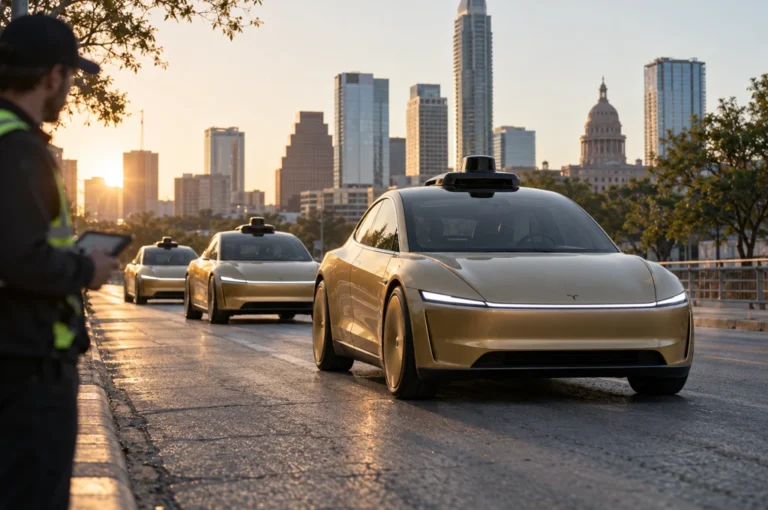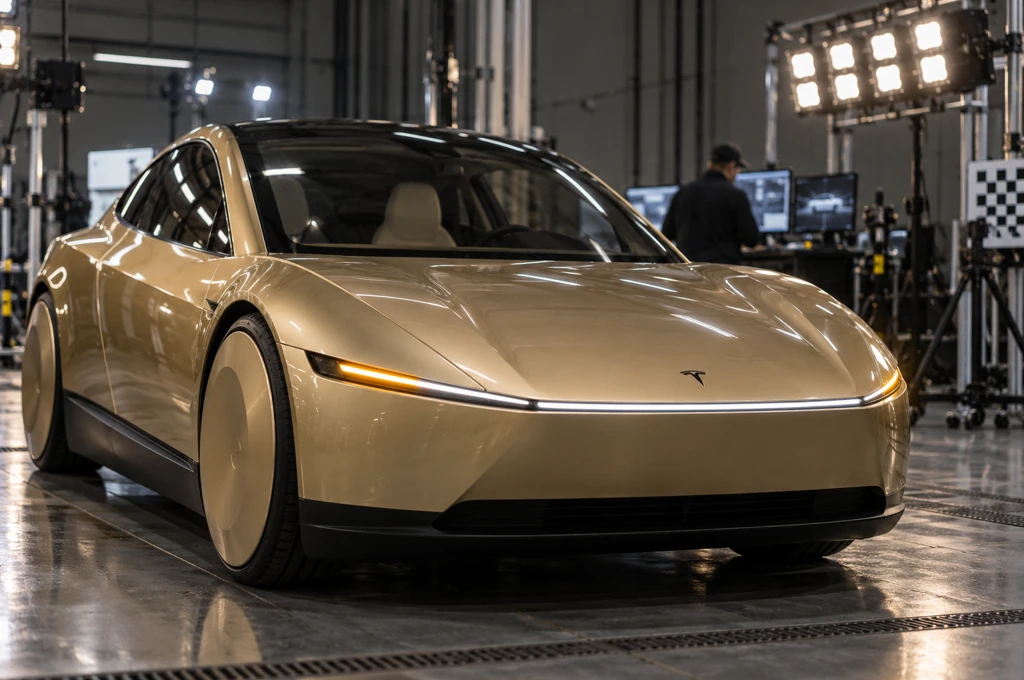
electric vehicle: The Tesla Cybercab turn-signal hurdle eased following a fresh federal regulatory push that addresses non-traditional lighting arrays on autonomous vehicles. Traditional automotive lighting standards long assumed a human driver operated individual mechanical switchgear behind a physical steering wheel. Tesla designed its purpose-built autonomous coupe without pedals, mirrors, or standard stalks, which created immediate compliance friction with Federal Motor Vehicle Safety Standard 108. The National Highway Traffic Safety Administration published updated guidance proposals to modernise signal placement and activation protocols for automated fleets, clearing a direct engineering bottleneck for the carmaker.
⚡ Quick AI Overview & Key Recommendation
The Tesla Cybercab turn-signal hurdle eased because federal safety regulators proposed updating FMVSS 108 lighting rules. The revision allows automated systems to actuate exterior signals without physical steering column stalks or traditional human interface points, removing a major roadblock to mass commercial deployment.
Automakers face stringent guidelines when removing mechanical inputs from driver cabins. News tracked by platforms like barchart[dot]com and tech-insider[dot]org shows investors watch these compliance milestones closely, especially as broader market valuations price in long-term robotaxi expansion. The US Electric Vehicle Market Share Reaches 6.1% as Adoption Gains Speed, and autonomous commercial units represent the next phase of fleet electrification. If regulators formalise these lighting allowances, Tesla avoids redesigning its minimalist interior architecture to fit physical switchgear.
electric vehicle: Tesla Cybercab Turn-Signal Hurdle Eased: Head-to-Head Specification Comparison
To understand the mechanical differences between purpose-built autonomous vehicles and standard driver-operated electric cars, we contrast the Cybercab configuration against Tesla’s current consumer foundation, the Model 3 Long Range.
| Feature | Tesla Cybercab (Target Specs) | Tesla Model 3 Long Range |
|---|---|---|
| Base Price | Target ~$30,000 | ~$42,490 |
| Battery Capacity | ~45 kWh (Est.) | 75 kWh |
| Estimated Range | ~200 miles (322 km) | 341 miles (548 km) |
| Powertrain Output | Single Motor (~200 hp est.) | Dual Motor AWD (~394 hp) |
| Charging Method | Inductive Wireless Only | NACS Cable Fast Charging (250 kW) |
| Cabin Controls | No Pedals, No Steering Wheel | Full Physical Controls & Dual Stalks/Buttons |
| Lighting Actuation | Fully Automated / Software Controlled | Driver Stalk / Capacitive Steering Buttons |
| Warranty | Commercial Fleet Standard (TBD) | 4-Year / 50,000-Mile Basic |
As the Tesla Cybercab turn-signal hurdle eased through this updated rulemaking proposal, the vehicle maintains its distinct low-drag, two-seat form factor. The car relies on continuous camera vision and neural networks rather than mechanical sensor redundancy. Financial reporting from Bloomberg and Reuters underscores that keeping the manufacturing design simple remains critical if Tesla expects to reach sub-$30,000 build targets.
Key Differences: Real-World Performance, Comfort & Features
Production viability hinges on regulatory parity. Traditional road cars satisfy FMVSS 108 by verifying that drivers can instinctively touch a turn indicator without taking their eyes off the road. The Cybercab eliminates the driver entirely. Signalling intent becomes a machine task triggered by navigation logic, route planning, and onboard path-prediction computers. The proposed regulatory text acknowledges that external road users only need clear, unambiguous light output, regardless of how the signal was initiated inside the cabin.
Removing manual stalks changes passenger space completely. The Cybercab cabin features two bucket seats, a large central touchscreen, two cup holders, and no forward mechanical linkages. The chassis utilizes inductive charging plates underneath the floor pan, which eliminates physical charge ports. That design keeps operational downtime low in dense urban taxi depots. Fleet managers monitor these developments alongside broader capital shifts, such as filings lodged with the U.S. Securities and Exchange Commission that detail manufacturing expenditures across corporate ventures.
Charging ergonomics also set the vehicles apart. Standard electric cars require manual cable handling, which suits domestic garages and highway fast chargers. The Cybercab is designed for automated transit hubs where ground pads replenish the battery pack without human intervention. While wireless charging involves slight efficiency trade-offs, it keeps robotaxi turnarounds rapid and maintenance overhead low.
Final Buying Verdict: Which One Should You Buy?
Assessing these platforms depends strictly on whether your requirement is private consumer ownership or speculative fleet integration.
Buy the Tesla Model 3 if you need immediate, dependable transportation today. The Model 3 offers proven high-speed charging, extensive real-world range, robust luggage capacity, and full personal control. It complies with every road regulation globally, making it a reliable personal purchase.
Plan for the Tesla Cybercab if you manage commercial urban transport fleets or operate ride-hailing services. The machine architecture aims to deliver the lowest cost per mile across high-utilization routes. Now that the Tesla Cybercab turn-signal hurdle eased in NHTSA’s updated lighting proposal, fleet operators have clearer regulatory signals that autonomous transport hardware will receive a viable path to public roads.
Frequently Asked Questions
Why was the Tesla Cybercab turn signal a regulatory issue?
FMVSS 108 regulations historically required standard mechanical controls that human drivers operate directly. Because the Cybercab lacks a steering wheel and manual levers, it did not satisfy legacy compliance language.
How did the NHTSA proposal address the Cybercab turn signal?
NHTSA introduced proposed updates that allow automated driving systems to control turn signals electronically. This change validates vehicles that lack human driver switchgear.
Does the Cybercab have physical turn-signal stalks?
No, the Cybercab has no physical stalks, steering wheel, or pedals. The vehicle computer commands all indicator lights based on real-time navigation paths.
Will the Cybercab require wireless charging only?
Tesla revealed the Cybercab with inductive wireless charging as its exclusive charging method. It features no exposed charging port on the exterior panels.
What is the expected release window for the Tesla Cybercab?
Tesla aims to begin mass production around 2026. Deployment timelines remain subject to federal safety exemptions and state-level driverless approvals.
Can private buyers purchase a Cybercab?
Tesla announced plans to sell the vehicle to individual buyers for under $30,000, though early allocations will likely prioritize autonomous commercial fleet operations.
Does the Cybercab include side mirrors?
No, the concept eliminates external side mirrors entirely. The autonomous computer relies on wrap-around cameras to track surroundings.
How does the proposed NHTSA lighting rule affect other robotaxi makers?
The lighting proposal benefits all autonomous vehicle builders, including Waymo and Zoox, by establishing objective standards for computer-actuated exterior signals.
Is inductive charging as fast as cable Supercharging?
Inductive charging is generally slower than 250 kW Superchargers due to thermal constraints. However, it operates automatically without manual labor in taxi depots.
What is the next step for NHTSA’s lighting proposal?
The proposed rule must complete a public comment period before NHTSA issues a binding final rule that codifies modern signal requirements.
Automotive Regulation Meets Autonomous Reality
Now that the Tesla Cybercab turn-signal hurdle eased through progressive NHTSA lighting proposals, autonomous designs face one less barrier on the path to mass deployment. Regulators are adapting legacy rules to accommodate software-controlled mobility, helping clean transportation fleets move from experimental prototypes to functional commercial reality.
Source: Electric Vehicles (eletric-vehicles[dot]com)