
Whether an EV saves you money depends almost entirely on where you charge and how much you drive. The arithmetic is simple, and doing it with your own figures beats any generic comparison.
- Cost per 100 km is the only fair comparison unit.
- For an EV: consumption in kWh per 100 km, multiplied by your electricity rate.
- For petrol: litres per 100 km, multiplied by the pump price.
- Home charging and public fast charging can differ enough to change the conclusion.
The two formulas
For the electric car, take consumption in kWh per 100 km and multiply by what you pay per kWh. If your car uses 16 kWh per 100 km and you pay 8 units of currency per kWh, that is 128 per 100 km.
For the petrol car, take consumption in litres per 100 km and multiply by the pump price. If it uses 7 litres per 100 km at 100 per litre, that is 700 per 100 km.
The figures above are placeholders to show the method. Substitute your real electricity tariff, your real pump price and, ideally, consumption measured over a few weeks of your own driving rather than a brochure claim.
Charging mix changes the answer
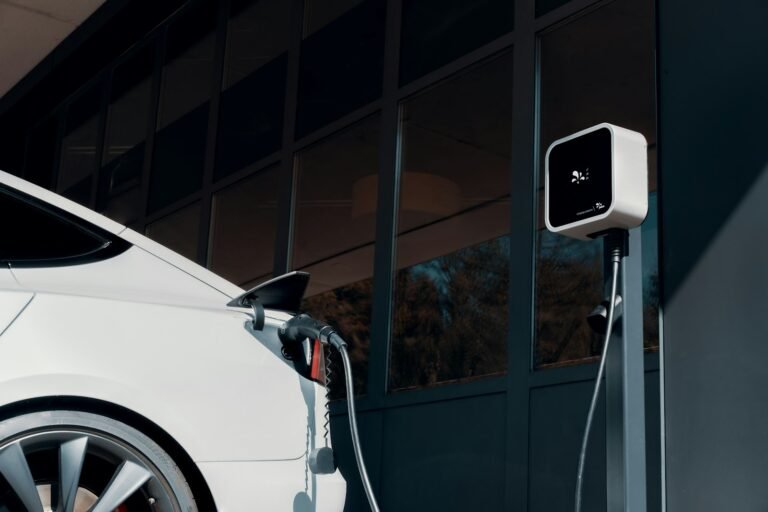
Public DC fast charging usually costs several times what home overnight charging costs. If most of your energy comes from a home tariff, the EV case is strong. If you cannot charge at home and rely on public rapid charging, the gap narrows considerably and can occasionally close.
| Charging pattern | Effect on cost per 100 km | Who this fits |
|---|---|---|
| Overnight at home, off-peak | Lowest | Driveway or allocated parking |
| Mixed home and occasional rapid | Low to moderate | Most owners |
| Public rapid only | Highest | Flat dwellers without on-street provision |
What else belongs in the comparison
- Servicing. Usually lower on an EV. No oil changes, less brake wear thanks to regeneration.
- Tyres. Often a little higher. EVs are heavier and torque is instant.
- Purchase price and depreciation. Frequently the largest number in the whole calculation, and the one most often left out.
- Incentives and taxes. These change; check the current position rather than an article from last year.
- Home charger installation. A one-off cost that should be spread across your ownership period.
A sensible way to decide
Work out cost per 100 km for both, multiply by your genuine annual distance, then add the annual difference in servicing and any incentive. Compare that yearly saving against the difference in purchase price. That gives you a payback period, which is a far more honest answer than a per-kilometre figure alone.
Frequently asked questions
How do I calculate EV running costs?
Multiply your consumption in kWh per 100 km by the price you pay per kWh. Compare that against litres per 100 km multiplied by the pump price. Cost per 100 km is the only fair comparison unit.
Is an EV cheaper if I cannot charge at home?
The advantage narrows considerably. Public rapid charging usually costs several times an off-peak home rate, so run the calculation with the rates you will actually pay before assuming a saving.
What costs do people forget?
Depreciation and purchase price, which are usually the largest numbers in the comparison, plus home charger installation, tyres, and the fact that incentives and tax treatment change from year to year.