
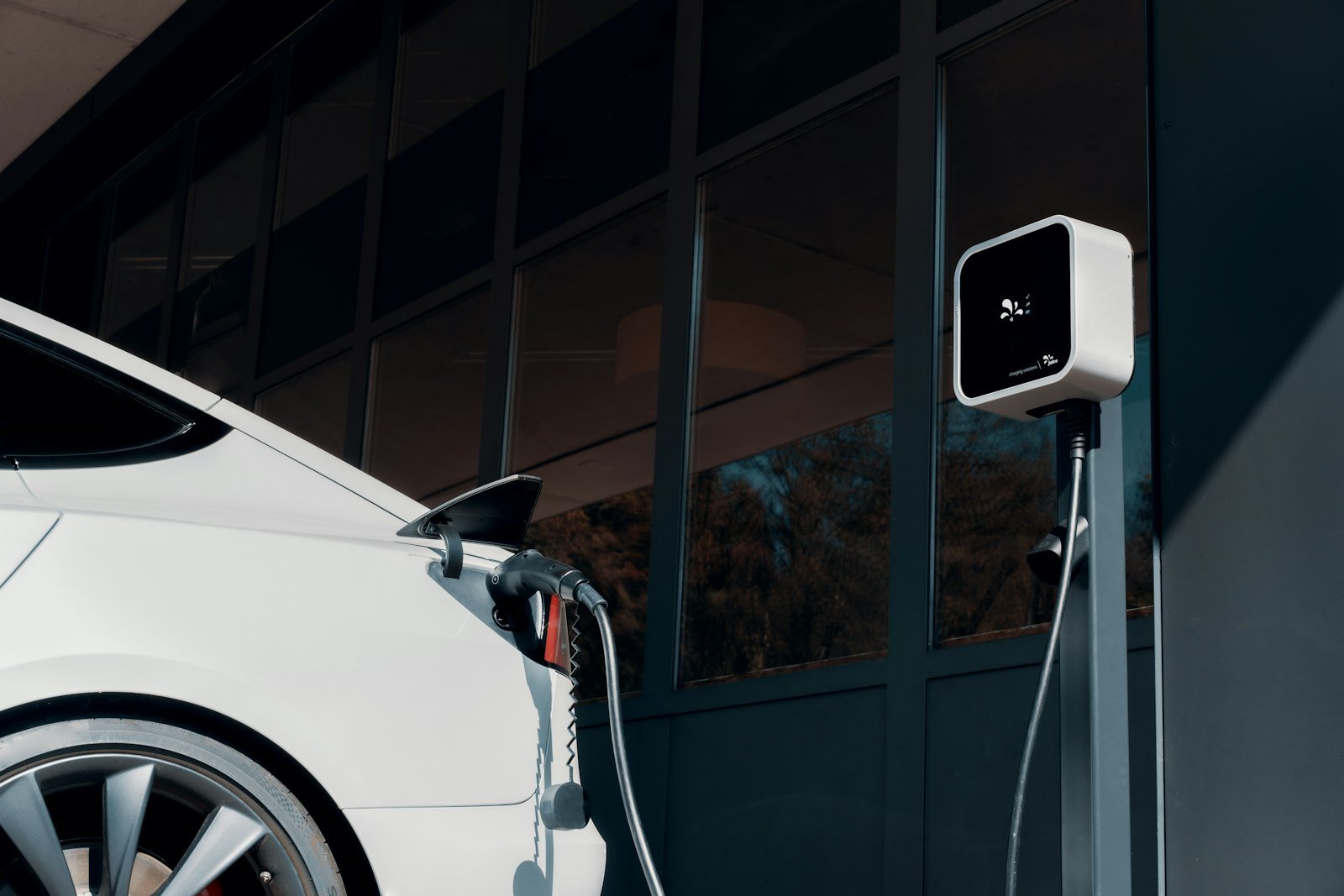
Home charging is where most EV owners get most of their energy, and it is also where the most money gets wasted. A bigger wallbox is not a better wallbox if your supply cannot feed it or your car cannot accept it.
- Work out your daily kilometres first. Most drivers need far less power than they think.
- The car’s onboard AC charger sets the ceiling. A 7.4 kW car cannot use an 11 kW wallbox.
- Three-phase supply is what unlocks 11 kW and above, and many homes do not have it.
- A scheduled or smart charger that shifts to off-peak hours usually saves more than extra kilowatts.
Start with your actual driving
Take your weekly distance and divide by seven. A typical EV uses somewhere between 13 and 20 kWh per 100 km depending on size, speed and weather. If you drive 40 km a day, you need roughly 6 to 8 kWh overnight. Even a modest 3.3 kW point replaces that in around two hours.
| Wallbox | Typical supply | Rough energy in 8 hours | Suits |
|---|---|---|---|
| 3.3 kW | Standard single phase | about 26 kWh | Short commutes, second cars, plug-in hybrids |
| 7.4 kW | Single phase, higher current circuit | about 59 kWh | Most households with one EV |
| 11 kW | Three phase | about 88 kWh | Long daily distances, two EVs, short parking windows |
Your car sets the ceiling
AC charging goes through the car’s onboard charger. If that unit is rated at 7.4 kW, an 11 kW wallbox will still deliver 7.4 kW. Check the car’s AC rating before you buy, not the DC fast charging figure, which is a completely separate system.
The specification you want is the onboard AC charger rating, sometimes listed as “AC charging” or “Type 2 charging”. The big headline number in the brochure is usually DC fast charging, which a home wallbox does not use.
Supply, cable runs and the electrician
The install often costs as much as the hardware. The distance from your consumer unit to the parking spot, the cable size required, whether load management is needed and whether an earth rod is required all move the price. Get the survey done before you choose a model.
Load management deserves attention. A charger that can throttle itself when the house draws heavily lets you install a higher rated unit without upgrading your supply.
Tethered or socketed
A tethered unit has the cable permanently attached, which is convenient day to day. A socketed unit takes any Type 2 cable, which is tidier and more future proof if you change cars. Neither is wrong.
Smart features worth paying for
Scheduling to off-peak hours is the one feature that reliably pays for itself where time-of-day tariffs exist. Solar matching is genuinely useful if you have panels. App-based energy reporting is pleasant but rarely changes behaviour after the first month.
The short answer
For most single-EV households with overnight parking, a 7.4 kW smart charger with scheduling is the sweet spot. Go to 11 kW only if you have three-phase supply, a car that can use it, and a genuine need to refill quickly in a short window.
Frequently asked questions
Is a 7.4 kW charger enough?
For most single-EV households, yes. A 7.4 kW point adds roughly 59 kWh over an eight hour overnight window, which is far more than the average daily drive consumes. Step up only if you have three-phase supply, a car that can use it and a short parking window.
Can I just use a normal wall socket?
You can, but treat it as a backup rather than a plan. A domestic socket typically delivers around 2 kW to 2.3 kW, which is slow, and continuous high current draw on old wiring is a real risk. Have any regular charging point installed by a qualified electrician.
Will an 11 kW wallbox charge my car faster than a 7.4 kW one?
Only if the car can accept it. AC charging is limited by the vehicle onboard charger, so a car rated at 7.4 kW draws 7.4 kW from an 11 kW wallbox. Check the AC rating, not the DC fast charging figure.