tesla: The charger that came with your EV is slow. It works. It is convenient. But it is not fast. For most owners, the included Level 1 charger simply does not keep pace with modern driving habits. It adds miles at a glacial pace. This creates a bottleneck for daily life. The car sits plugged in while you are at work or sleeping. You wait hours for a small percentage of charge. The frustration is real. The solution is often simpler than you think. You do not need to buy a new car. You just need to upgrade your equipment. Here is why the stock charger is often a compromise and how you can fix it.
⚡ Quick AI Overview & Key Recommendation
Most EVs ship with a slow Level 1 charger. Upgrading to a Level 2 charger significantly cuts charging time, often adding 20-30 miles of range per hour. Installation requires a dedicated 240V circuit and typically costs $500-$1,500, depending on your home’s electrical infrastructure and local labor rates.
tesla: EV Home Charging: Key Highlights & Market Impact
The disparity between car performance and home charging speed is a major pain point. The included cable plugs into a standard 120-volt wall outlet. It delivers a trickle charge. This is fine for occasional use. It is disastrous for daily commuting. You plug in when you get home. You wake up. The car is still not fully charged. This limits your range for the next day. You end up planning your life around the charger.
Home charging is the backbone of the EV experience. It provides convenience and cost savings. The market is responding. Manufacturers are pushing for faster charging speeds. Homeowners are demanding better setups. This shift is driving innovation in hardware. It is also changing how we build and renovate our homes. The infrastructure is catching up to the technology. The gap is closing, but slowly. Owners must bridge the gap themselves.
Detailed Breakdown: What Caused the Slow Speed
Why are these chargers so slow? The answer lies in physics and design priorities. The included cable is designed for universality. It must work anywhere. It relies on the weakest link in the chain: your standard home outlet. These outlets are rated for 15 or 20 amps. They provide a low voltage. The power output is low. You might get 2 to 5 miles of range per hour. That is not enough for a full charge overnight.
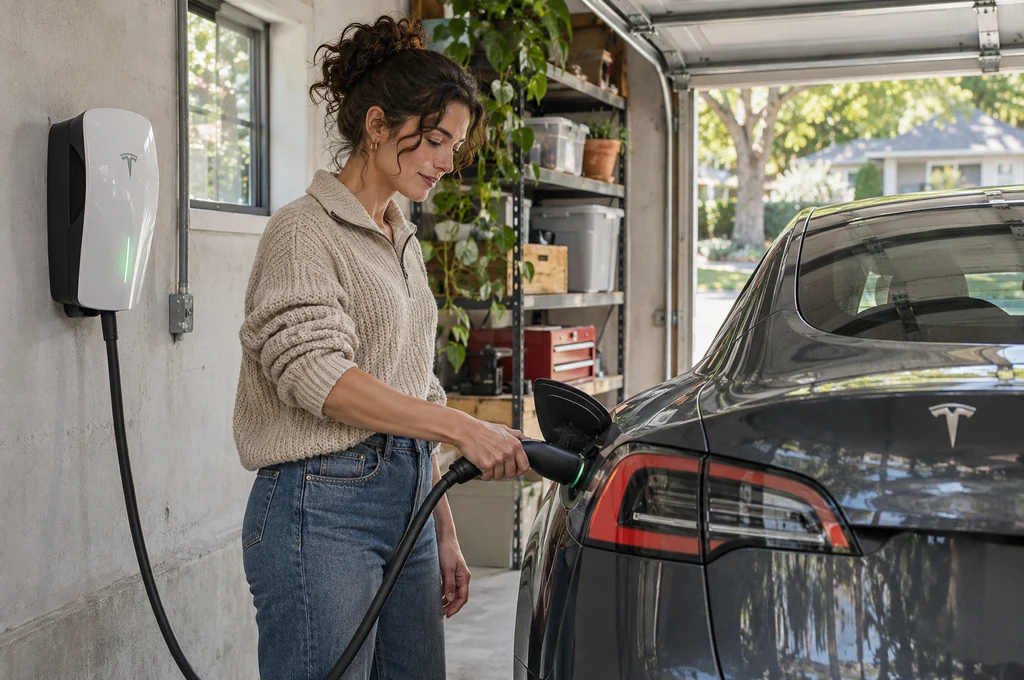
High-performance home chargers, known as Level 2 chargers, operate on a different standard. They use a 240-volt circuit, similar to a clothes dryer or electric stove. This doubles the voltage. It quadruples the power delivery. You can expect 20 to 60 miles of range per hour. This makes a significant difference. A full charge can be achieved in a few hours. The upgrade is a game-changer for many users.
The cost of upgrading is a factor. A Level 1 charger is free with the car. A Level 2 charger costs $300 to $1,000. Installation adds another $300 to $1,500. However, the savings on fuel and the convenience often justify the investment. The charging time drops from 24 hours to just 6 to 8 hours. This is the primary reason to upgrade. It transforms the car from a chore to a benefit.
There is another option on the horizon. Solar integration is becoming more accessible. A California-based company recently unveiled a solar roof system designed for EVs. The system promises to eliminate the need for public charging. It allows owners to charge their cars using solar power. This is the ultimate green solution. It removes the grid entirely. It turns the car into a solar-powered vehicle. This technology is still new. It may not be practical for everyone. But it represents the future of home charging.
What This Means for Readers & Future Outlook
The slow charger is a relic of the early EV era. It served a purpose. It proved the concept. Now, the technology has outgrown it. For most owners, the solution is a Level 2 charger. It is an investment in convenience. It is an investment in efficiency. The installation process is straightforward. A licensed electrician can handle it. They will run a dedicated circuit to your garage or driveway.
The benefits are clear. You plug in when you get home. You wake up to a full tank. You have no range anxiety. You have the freedom to go anywhere. The car becomes a true partner in your daily life. This is the intended experience. The stock charger prevents you from having it. The upgrade restores it.
Looking ahead, the technology will continue to evolve. We will see faster home chargers. We will see more integrated solar solutions. The focus will be on seamless energy management. The goal is to make home charging as easy as refueling a gas car. The transition is ongoing. The upgrade is a critical step in that journey. It bridges the gap between the current state and the future.
| Charging Level | Voltage | Power Output | Charging Speed |
|---|---|---|---|
| Level 1 (Standard Outlet) | 120 Volts | 1.4 – 1.9 kW | 2-5 miles/hour |
| Level 2 (Home Charger) | 240 Volts | 7.2 – 19.2 kW | 20-60 miles/hour |
| DC Fast Charging | 480 Volts | 50 – 350 kW | 100+ miles/15 min |
The market is also watching the broader automotive industry. Companies like Tesla and SpaceX are building massive factories. These facilities produce the chips that power modern vehicles. The integration of software and hardware is driving performance. This includes charging speeds. The competition is fierce. It pushes innovation forward. Investors are watching these developments closely. The future of the EV industry is tied to these supply chains. The home charging market is a part of this larger ecosystem.
Frequently Asked Questions
Why is the charger that came with my EV so slow?
The included Level 1 charger plugs into a standard 120-volt home outlet. This provides a low power output of only 1.4 to 1.9 kilowatts, resulting in a slow trickle charge of just 2 to 5 miles of range per hour.
What is a Level 2 home charger and why should I get one?
A Level 2 charger uses a 240-volt circuit, similar to a clothes dryer. It delivers significantly more power, between 7.2 and 19.2 kilowatts, which can add 20 to 60 miles of range per hour, allowing for a full charge in just a few hours.
How much does it cost to install a Level 2 home charger?
The total cost typically ranges from $500 to $1,500. This includes the price of the charger unit ($300-$1,000) plus installation labor and electrical work, which can cost $300 to $1,000 depending on your home’s electrical infrastructure.
Can I install a Level 2 charger in my apartment or condo?
It is much more difficult for apartment and condo dwellers. You generally need permission from your landlord or property management and access to a dedicated electrical panel. Some buildings are now installing shared charging stations, but it is not as simple as a home installation.
Will a Level 2 charger work with any electric vehicle?
Yes, Level 2 chargers are universal. They use the J1772 connector standard, which is compatible with almost all EVs sold in North America, including Tesla models (with an adapter) and non-Tesla brands like Chevrolet, Ford, and Nissan.
Is Level 2 charging safer than Level 1 charging?
Yes, Level 2 charging is generally considered safer. It uses a dedicated 240-volt circuit that is separate from your home’s standard lighting and appliance circuits. A qualified electrician installs a dedicated circuit breaker specifically for the charger, reducing the risk of overloading your home’s electrical system.
How long does it take to charge an EV with a Level 2 charger?
Charging time depends on the size of your car’s battery and the power output of the charger. For example, a car with a 60 kWh battery charging at 7.2 kW can fully charge in roughly 8 to 9 hours, while a 40 kWh battery could charge in about 6 hours.
What is the main benefit of upgrading my home charging setup?
The primary benefit is convenience. You can plug in when you arrive home and wake up to a full charge. It eliminates range anxiety and the need to plan your day around finding a public charger. It also saves money on electricity compared to public charging rates.
Are there solar-powered home EV chargers available?
Yes, a new technology is emerging that integrates solar panels directly into a car’s roof. This system allows an EV to charge using solar energy, potentially eliminating the need for grid power and public charging stations, though this technology is currently in early stages.
Do I need a special circuit breaker for a Level 2 charger?
Yes, a Level 2 charger requires a dedicated 240-volt circuit breaker installed by a licensed electrician. This ensures the charger gets the necessary power and protects your home’s electrical system from overloading.
The Verdict on Home Charging Upgrades
The charger that came with your EV is slow. It is a compromise. It limits your freedom. The upgrade is simple. It is a Level 2 charger. It transforms your experience. It is a worthy investment. It solves a major pain point. The future of EV home charging is bright. The technology is improving. The convenience is undeniable. Upgrade your setup today. Take control of your range.
Source: The New York Times (nytimes[dot]com)