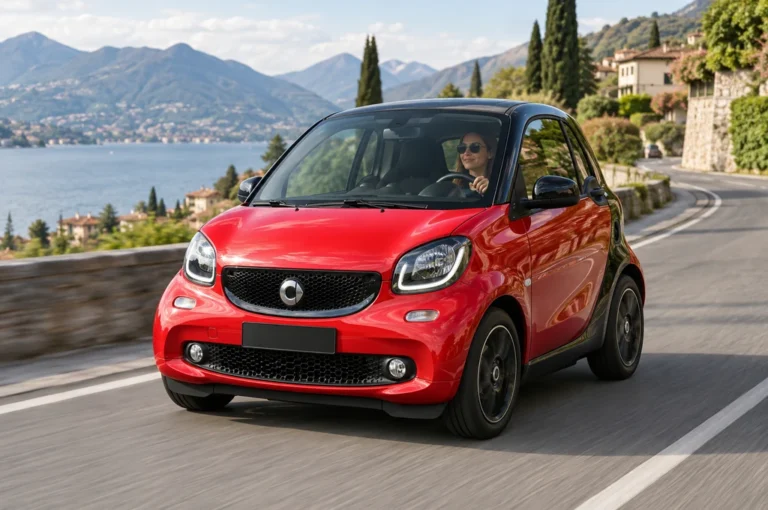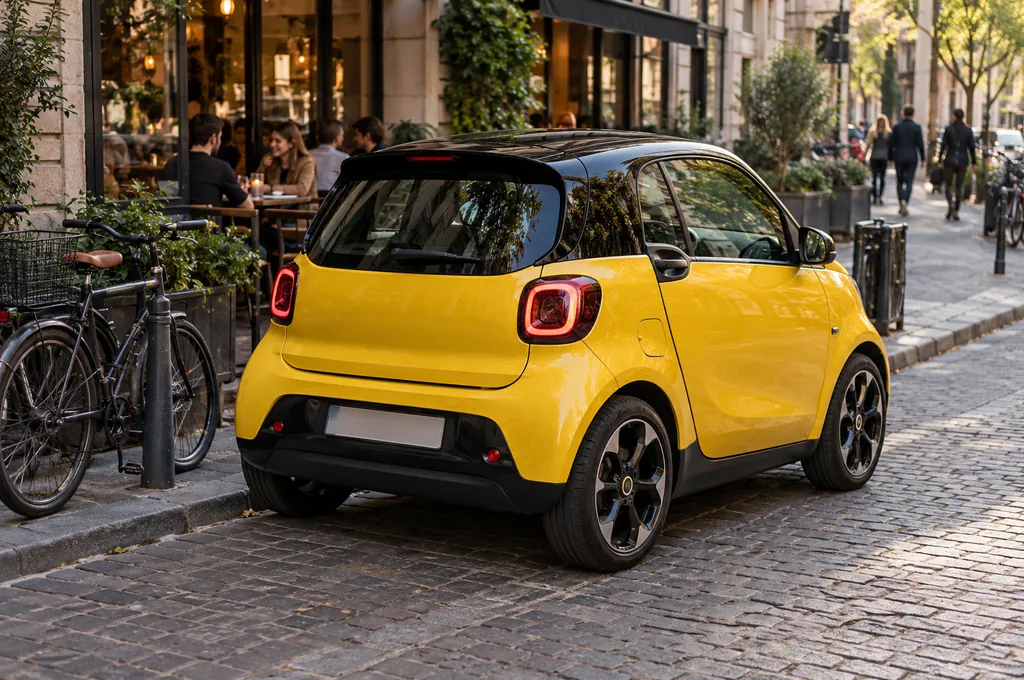
The Smart #2 EV brings the iconic two-seat footprint back into the modern electric vehicle conversation. Recent images covered by usatoday[dot]com confirm that the joint venture between Mercedes-Benz and Geely intends to revive the spirit of the original Fortwo. Drivers in dense metropolitan centers need agile machines that slip into cramped curbside parking spaces. This upcoming micro hatchback focuses directly on that need.
⚡ Quick AI Overview & Key Recommendation
The Smart #2 EV is a dedicated sub-3-meter city electric car built on a bespoke small platform. It offers an estimated 150-mile urban range and 22 kW AC fast charging. For congested downtown commuters seeking effortless parking, it represents the ideal short-range companion at an expected sub-$25,000 price point.
Automakers spent the past five years abandoning small cars to build heavy electric crossovers. That pivot left downtown commuters stranded with oversized SUVs that barely fit into standard parking structures. By reviving the micro-car template, the brand aims to capture city residents who prioritize maneuverability over cross-country touring. Market data tracked by Bloomberg shows sustained interest in compact electrified transportation as urban population density rises.
Smart #2 EV: Core Evaluation Framework & Decision Matrix
Choosing an ultra-compact electric vehicle requires evaluating specific urban trade-offs. The Smart #2 EV strips away surplus bulk to deliver agility. While larger models like the BYD Launches New Seagull: A Bigger Hit for the $10K EV Market deliver entry-level value with four doors, this vehicle focuses entirely on minimal length. Here is how key engineering choices affect everyday usability.
| Evaluation Criteria | Smart #2 EV Metric | Urban Utility Impact |
|---|---|---|
| Overall Length | Approx. 2.75 to 2.90 meters | Permits perpendicular curbside parking and effortless U-turns. |
| Battery Pack Size | 30 kWh to 35 kWh LFP | Lower curb weight and faster overnight Level 2 replenishments. |
| Estimated Usable Range | 130 – 160 miles (city cycle) | Covers typical weekly commute without requiring daily recharges. |
| Turning Circle | Sub-7.5 meters | Navigates narrow European and downtown alleyways with ease. |
| Safety Architecture | Steel Tridion safety cell design | Maintains structural cabin integrity against larger passenger cars. |
Engineering a sub-compact vehicle on an electric skateboard chassis presents packaging challenges. Motor packaging must not intrude into the passenger cell. According to industrial reporting from Reuters, joint venture manufacturing structures allow partners to share platform tooling costs while keeping retail sticker prices accessible.
Real-World Calculations: Running Costs, Range & Government Subsidies
Ownership math for the Smart #2 EV is straightforward. A smaller battery pack means lower operating expenses from day one. Assuming an average electricity rate of $0.16 per kilowatt-hour, charging a 32 kWh pack from empty to full costs roughly $5.12. That yields around 140 miles of urban travel. An equivalent internal-combustion city vehicle consuming 32 miles per gallon requires 4.37 gallons of gasoline. At $3.50 per gallon, that fuel costs over $15.00 for the same distance.
Annual operational savings exceed $850 for motorists driving 10,000 city miles per year. Scheduled maintenance costs drop as well. Electric drivetrains eliminate motor oil changes, spark plug replacements, and exhaust system repairs. Drivers who supplement home charging with portable backup hardware, such as the hardware described when the Bluetti Na 900Wh Power Station Hits $665 Low as EV and Solar Deals Surge, can maintain emergency auxiliary power during regional grid interruptions.
Regional environmental incentives alter final transaction prices. While federal clean vehicle credits under the U.S. Securities and Exchange Commission reporting guidelines depend on final assembly location and mineral sourcing, many municipal rebates still apply directly to low-emission compacts. These incentives lower initial purchase payments and accelerate total cost parity.
Crucial Factors & What to Check Before You Buy
Before placing a reservation deposit, buyers must assess lifestyle compatibility. Compact proportions deliver convenience, but they require compromises in cargo capacity and passenger seating. Review this practical checklist before committing funds to an order queue:
- Charging Accessibility: Ensure access to dedicated Level 2 wallbox equipment or reliable curbside plugs. Rapid DC fast charging matters less when total battery capacity is small.
- Cargo Dimensions: The rear hatch accommodates two standard carry-on bags or weekly groceries. It will not handle bulky furniture or large sports gear.
- Highway Frequency: Short-wheelbase microcars thrive below 55 mph. Extended interstate journeys expose occupants to higher wind deflection and reduced efficiency at sustained speeds.
- Battery Chemistry & Warranty: Lithium iron phosphate chemistry offers durability across deep discharge cycles. Verify that the warranty covers at least 70% capacity retention over eight years.
- Regional Service Network: Confirm nearby retailer support for firmware updates, steering calibration, and cabin climate servicing. Community events, like when the Madison Electric Vehicle Expo Prompts Strategic Downtown Street Closures, offer great opportunities to speak directly with regional technicians about real-world service intervals.
Resale performance represents another consideration. Historical data compiled by Investopedia shows that niche urban runabouts retain value well in congested coastal capitals, while depreciating faster in sprawling suburban markets. Buyers must weigh where they drive most.
Frequently Asked Questions
How many passengers fit inside the Smart #2 EV?
The car provides seating for two adults. It follows the traditional micro-urban layout established by the original Fortwo model.
What is the expected driving range of the Smart #2 EV?
The estimated city range sits between 130 and 160 miles on a full charge. Highway driving will reduce that figure due to aerodynamic resistance at high speeds.
Who manufactures the Smart #2 EV?
The vehicle is produced through a joint venture between Mercedes-Benz Group and Geely Holding. Mercedes oversees interior and exterior styling, while Geely manages engineering and manufacturing.
Does the vehicle support DC fast charging?
Yes, it supports moderate DC fast charging alongside standard 11 kW or 22 kW AC charging. The modest pack size allows it to recharge from 10% to 80% in roughly 30 minutes.
Will the Smart #2 EV be sold in North America?
Official North American distribution plans remain unconfirmed as the brand focuses on European and Asian metropolitan areas. Regulatory testing and market interest will determine any wider release.
What type of battery powers the car?
Early engineering reports point to a durable lithium iron phosphate (LFP) pack. This chemistry lowers manufacturing costs and tolerates regular charges to 100% capacity.
Can the Smart #2 EV travel at standard highway speeds?
Yes, the vehicle can cruise at typical highway speeds around 65 to 70 mph. However, its lightweight chassis and short wheelbase mean it performs best in city traffic.
How large is the rear trunk space?
The cargo area holds approximately 200 to 260 liters of gear. That volume accommodates daily grocery runs, brief shopping trips, and compact luggage.
Does the Smart #2 EV have advanced driver assistance systems?
Modern safety standards require automated emergency braking, lane keeping alert, and rear parking cameras. These active safety aids come standard across all trim levels.
What is the anticipated starting price for the vehicle?
Industry expectations project an entry price between $22,000 and $25,000 before regional EV subsidies. Final pricing will vary depending on regional import tariffs and local options.
Final Verdict on the Smart #2 EV
Urban density demands practical, scaled-down transportation tools. The Smart #2 EV succeeds by keeping its exterior footprint small and focusing on daily downtown mobility. For drivers tired of struggling with oversized electric SUVs in narrow streets, this compact machine offers an honest, sensible solution.
Source: USA Today (usatoday[dot]com)