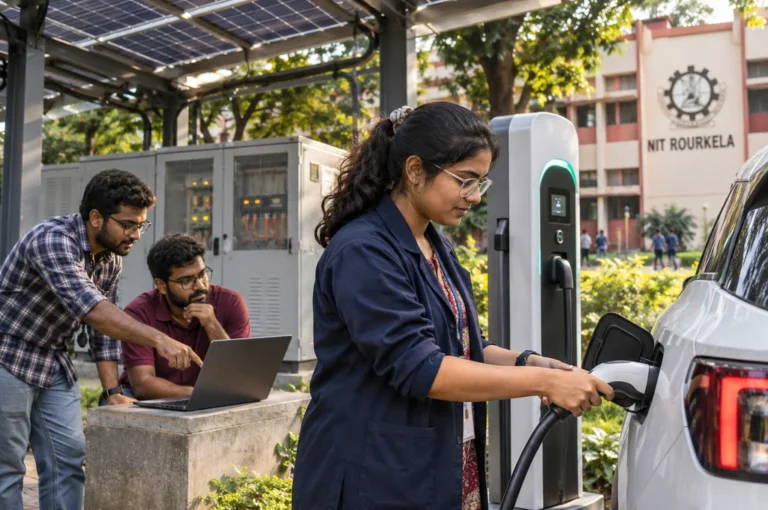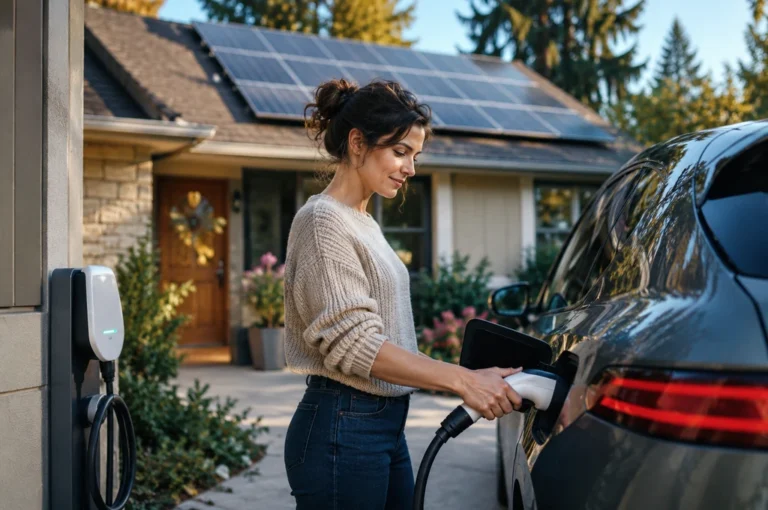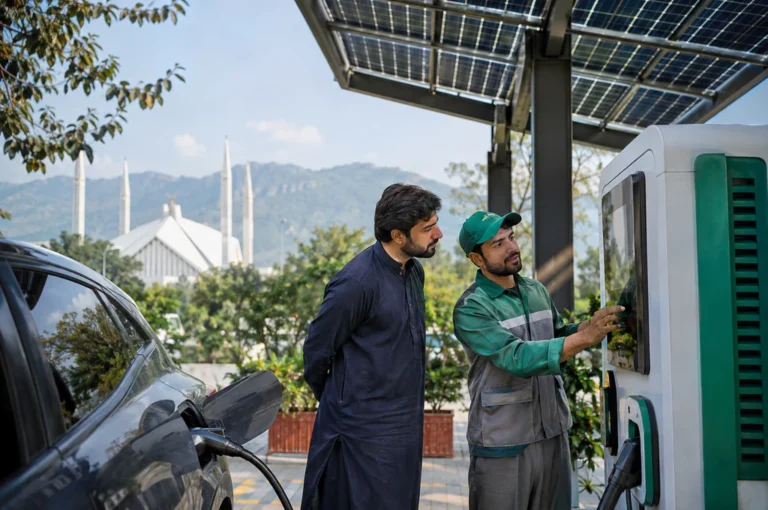
NIT Rourkela solar EV system: India’s push for electric mobility faces a stiff challenge. The electrical grid struggles to handle the sudden surges and drops in power that come with charging thousands of vehicles simultaneously. Researchers at the National Institute of Technology (NIT) Rourkela have developed a solar-powered EV charging system designed to solve this specific instability. This system does not just charge cars; it acts as a buffer for the entire power network.
⚡ Quick AI Overview & Key Recommendation
NIT Rourkela researchers secured a patent for a solar-powered EV charging system that actively stabilizes the electrical grid. By integrating solar energy with smart power management, this technology prevents voltage fluctuations during high-demand charging sessions, ensuring a reliable power supply for both vehicles and the grid.
The core problem is simple. When a fleet of electric buses or taxis plugs in, the load is massive. The grid can falter. The NIT Rourkela solution connects solar panels directly to the charging infrastructure. The excess energy generated by the sun is stored locally, ready to be fed back into the grid or used to charge the vehicles. This creates a self-regulating loop that keeps the voltage stable.
NIT Rourkela Solar EV System: The Technical Breakdown
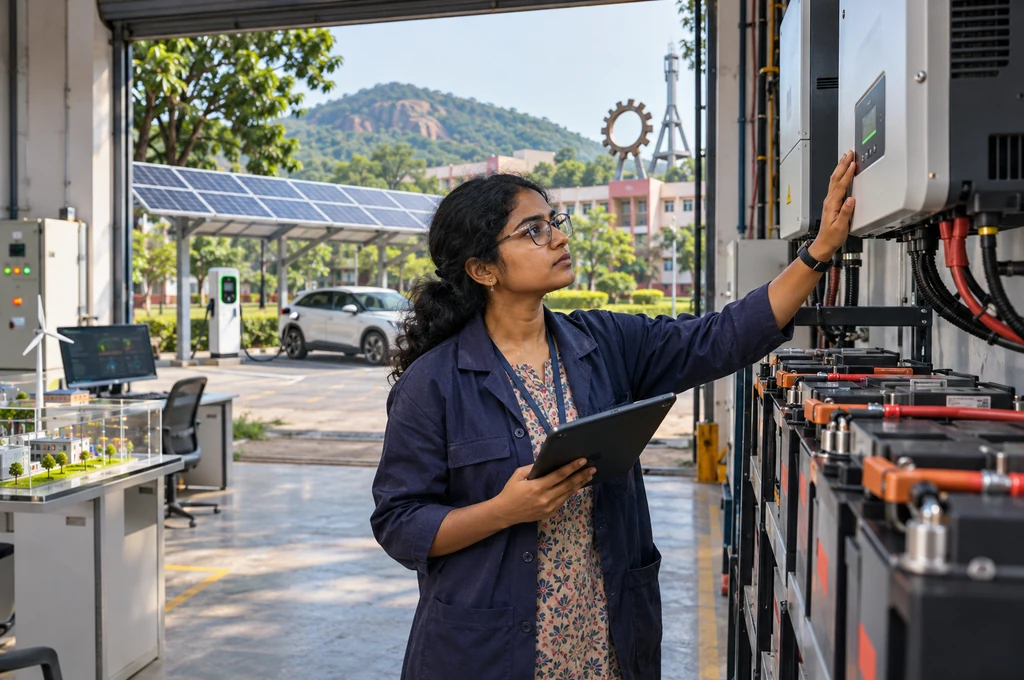
This innovation is more than a solar panel bolted to a charging station. It is a sophisticated integration of hardware and software. The system utilizes a robust power converter to manage the flow of electricity between the solar array, the battery storage, and the grid.
The mechanism works by constantly monitoring the grid frequency. If the grid is under heavy load, the system prioritizes the stability of the network over the speed of charging. It draws power from the solar storage to fill the gaps. This prevents blackouts and ensures that the electricity reaching the consumer remains constant.
Patents filed by the researchers, as reported by reuters[dot]com, detail a unique control strategy that optimizes energy usage. This approach ensures maximum efficiency. It captures solar energy during the day and releases it when the grid is weakest. This shifts the burden away from the main power plants.
Why Grid Stability Matters for EV Adoption
Without this stability, large-scale EV adoption could become a liability. Imagine a city where every household charges its car at once. The grid would collapse. The NIT Rourkela system solves this by treating the charging station as a smart node in the power network rather than a passive consumer.
The technology also reduces the strain on transmission lines. By generating power locally, the system cuts down on the energy lost during long-distance transmission. This makes the entire energy ecosystem more efficient and greener. It proves that EVs are not just about replacing petrol cars; they are about building a smarter, more resilient power infrastructure.
The Broader Impact on Solar Energy Infrastructure
This development is a significant milestone for the solar energy sector. It provides a blueprint for future smart grids. As solar penetration increases, managing the intermittency of the power source becomes critical. This system offers a practical solution.
Other countries are watching. The patent secured by the institute places India at the forefront of this technology. It shows that academic research can directly influence industrial standards. The system is scalable. It can be installed at bus depots, corporate offices, and public charging hubs.
By securing the patent, the researchers have ensured that this technology will move from the lab to the market. The focus now shifts to manufacturing and deployment. The potential to create a grid-independent charging network is immense.
Frequently Asked Questions
What is the main benefit of the NIT Rourkela solar EV system?
The primary benefit is grid stability. The system prevents voltage fluctuations and power outages during peak charging times by managing energy flow between solar panels, batteries, and the grid.
How does the solar EV system stabilize the power grid?
It uses smart power converters to monitor grid frequency and load. When the grid is under stress, the system releases stored solar energy to fill the gaps, ensuring a consistent power supply.
Who secured the patent for this technology?
Researchers at the National Institute of Technology (NIT) Rourkela secured the patent for this solar-powered EV charging system.
Where can this solar EV charging technology be used?
It is suitable for large-scale applications such as bus depots, corporate charging hubs, and public stations where grid stability is a major concern.
Does the system reduce reliance on the main power plant?
Yes, by generating and storing energy locally, the system reduces the load on the main power plant and minimizes energy loss during transmission.
What makes this technology different from standard solar charging?
Unlike standard solar charging, this system actively manages grid stability and integrates energy storage to buffer against power surges and drops.
Is this technology scalable for future use?
Yes, the system is designed to be scalable and can be deployed across various locations to support a growing fleet of electric vehicles.
How does the system handle peak charging demand?
The system prioritizes grid stability during peak demand, utilizing stored solar energy to maintain power quality rather than risking grid overload.
Can this technology help integrate more renewable energy into the grid?
Absolutely. By managing the intermittency of solar power, it facilitates a smoother integration of renewable energy into the existing electrical infrastructure.
What was the outcome of the research at NIT Rourkela?
The research resulted in a patented technology that demonstrates how solar-powered EV charging can actively contribute to a more stable and reliable electrical grid.
The Future is Stable and Solar-Powered
The NIT Rourkela solar EV system represents a vital step forward. It proves that green technology can be robust and reliable. By solving the grid stability issue, this innovation paves the way for a cleaner transportation future.
Source: Business Standard (business-standard[dot]com)