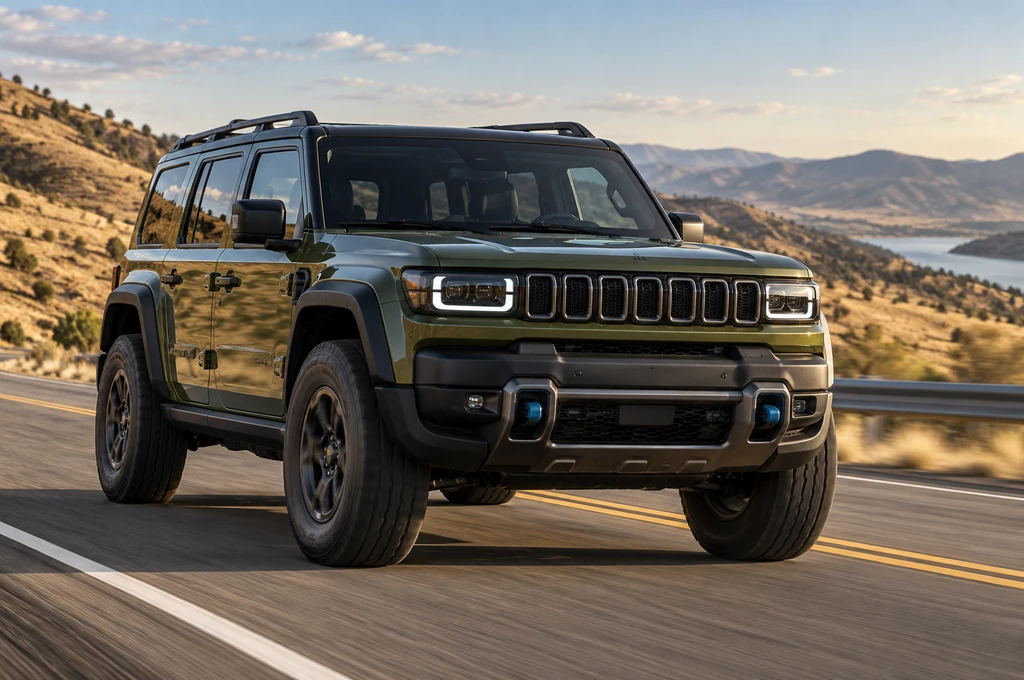
electric SUV: The latest independent Jeep Recon EV range test revealed an unexpectedly low highway endurance of just 160 miles. For an all-electric utility vehicle producing 670 combined horsepower, this real-world figure fell well short of early expectations. As first noted by electrek[dot]com, sustained highway speeds expose the severe aerodynamic penalty of a boxy, trail-focused body style.
Horsepower does not equal road efficiency. The Recon EV carries aggressive styling, removable doors, and massive torque. Those same features work against the battery the moment the vehicle merges onto an interstate.
electric SUV: Jeep Recon EV Range Test: Key Highlights & Market Impact
The outcome of this test sent immediate ripples through the automotive sector. Stellantis designed the Recon EV on the STLA Large platform to prove that electric propulsion can conquer serious trails. Yet the trial showed that high-speed cruising drains the pack rapidly. At a constant 70 mph, the SUV consumed energy at an alarming pace, running out of juice after 160 miles.
Automotive analysts tracking Stellantis on Reuters frequently note that highway efficiency remains the primary hurdle for traditional SUV buyers. Off-road enthusiasts often drive hundreds of miles across open highways to reach remote trailheads. A highway radius under 200 miles demands frequent charging stops before the vehicle ever touches dirt.
| Vehicle Metric | Target / Factory Spec | Observed Highway Test Result |
|---|---|---|
| Total Output | 670 Horsepower | 670 Horsepower (Dual Motor) |
| Cruising Speed | EPA Mixed Cycle | Sustained 70 MPH Highway |
| Observed Range | ~280 Miles (Projected) | 160 Miles |
| Efficiency Penalty | Baseline Reference | Approx. 40% Drop vs. Mixed Cycle |
Inside the cabin, Stellantis added rugged utility and digital displays to compete with tech-heavy rivals. Modern buyers expect massive displays and plush cockpits, an approach seen in models like BYD’s New SUV: Two 30-Inch Screens Inside. But cabin screens do little to offset heavy power draw when the road stretches ahead.
Detailed Breakdown: What Caused the Low Efficiency
Aerodynamics caused the biggest drop. Air resistance rises with the square of speed. The Recon EV has a flat front fascia, wide upright mirrors, and square rear quarters. Air cannot flow cleanly across these surfaces. At 70 mph, the twin motors must pull continuously against a virtual wall of air.
Tire selection created the second major obstacle. Off-road tread patterns grip rocks and mud with ease. On dry asphalt, those aggressive blocks generate heavy rolling resistance. They bleed energy with every rotation. The aggressive rubber alone can shave 10 to 15 percent off total travel distance compared to low-rolling-resistance touring tires.
Weight compounded the issue. High-output electric vehicles require heavy battery packs and dual power inverters to produce 670 horsepower. Every pound of structural steel and battery chemistry demands sustained wattage to maintain velocity. Government purchase incentives discussed in the Electric Car Grant: What You Need To Know encourage adoption, but incentives cannot alter the laws of physics. When engineers evaluate the Jeep Recon EV range test data, heavy curb weight and wind drag explain nearly the entire deficit.
What This Means for Readers & Future Outlook
Buyers looking at the Recon EV need to adjust their travel habits. If you plan to use this SUV as a commuter or weekend trail explorer, 160 miles of highway range means careful route planning. Fast-charging stations are scarce near state parks and national forests. Arriving at a trail with 20 percent state of charge leaves little reserve for low-range crawling.
Automotive equity valuations covered by Bloomberg reflect a cautious market that penalizes inefficient utility designs. Automakers must deliver real-world utility, not just impressive horsepower numbers on spec sheets. In urban areas, some consumers bypass large haulers entirely and select smaller runabouts, such as the River Indie Now on Flipkart: A New Path to Buy the SUV Scooter, reserving long trips for other platforms.
Investors studying capital allocation on Investopedia know that battery size cannot grow indefinitely without pricing vehicles out of reach. For Stellantis, the path forward requires aerodynamic refinement, smarter motor decoupling during highway cruise, and optimized battery thermal management. The reality exposed by this Jeep Recon EV range test will force buyers to decide whether raw trail muscle justifies short interstate range.
Frequently Asked Questions
What is the Jeep Recon EV?
The Jeep Recon EV is an all-electric off-road SUV built by Stellantis on the STLA Large platform. It features removable doors, dual electric motors, and 670 horsepower.
How far did the Jeep Recon EV travel in the highway test?
The SUV covered approximately 160 miles during a continuous 70 mph highway evaluation. This outcome was well below initial mixed-cycle projections.
Why did the Jeep Recon EV achieve such low mileage at highway speeds?
High aerodynamic drag from its boxy shape, aggressive all-terrain tires, and dual high-output motors caused rapid battery depletion at continuous highway speeds.
Was the test conducted with the doors removed?
No, the test ran in standard enclosed highway trim with doors and roof panels attached. Driving without doors creates additional aerodynamic turbulence that reduces range further.
What was the expected factory range for the vehicle?
Industry expectations and target figures pointed to roughly 250 to 300 miles of mixed driving. Sustained interstate speeds consistently produce lower numbers than mixed EPA tests.
Does 670 horsepower reduce electric vehicle range?
Yes, high-horsepower dual-motor setups draw more background current and add significant curb weight. While full power is only used under hard acceleration, the hardware weight increases baseline energy consumption.
How do off-road tires affect highway efficiency?
Aggressive tread blocks create higher rolling resistance and friction on pavement. This tire design reduces highway travel distance by up to 15 percent compared to standard highway tires.
Can software updates improve the highway performance?
Software updates can optimize front motor decoupling and thermal regulation during steady cruising. However, software cannot resolve physical aerodynamic drag or heavy tire friction.
Does cold weather impact the Jeep Recon EV range test outcome?
Cold ambient temperatures lower battery efficiency and increase air density, reducing total distance. This specific test focused primarily on the aerodynamic penalties of high-speed cruising.
Is the Recon EV meant to replace the Jeep Wrangler?
No, Stellantis designed the Recon EV to sell alongside the Wrangler lineup. It serves buyers who want an all-electric trail experience without a combustion engine.
Final Verdict on Highway Capability
The Jeep Recon EV range test proves that horsepower cannot outmuscle physics on an open interstate. Stellantis built an unapologetic trail runner, but everyday drivers will need more battery density or better aero to make highway travel stress-free.
Source: Electrek (electrek[dot]co)