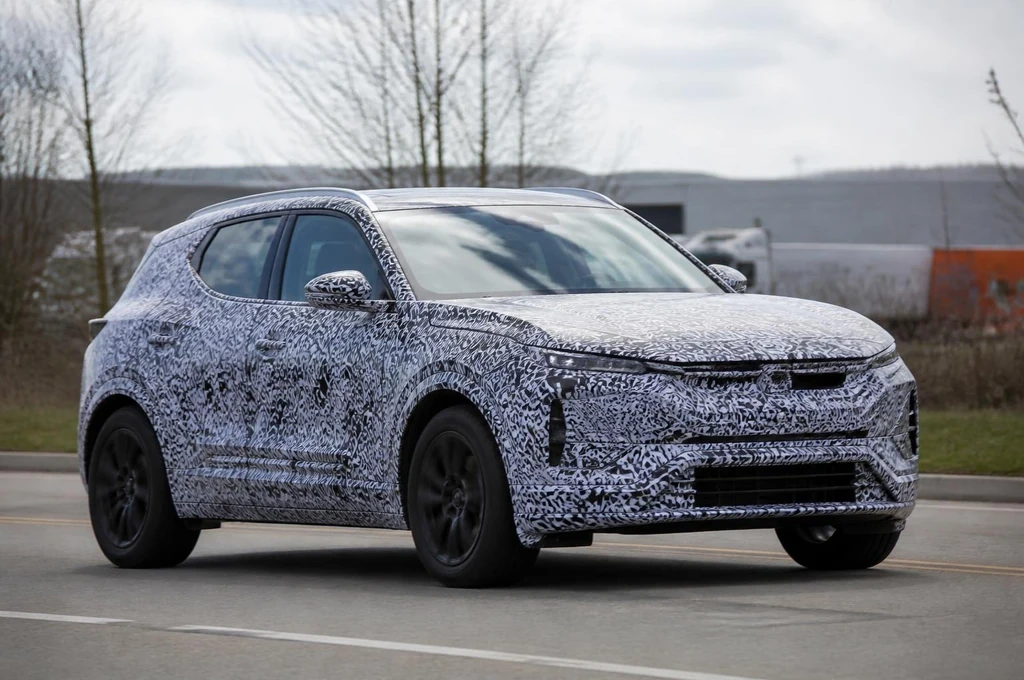
electric SUV: Spy photographers recently captured the Hyundai IONIQ 4 during public road trials, giving drivers an early glimpse of an accessible crossover. This camouflaged prototype suggests Hyundai wants to capture the entry-level segment before rival automakers can lock down affordable urban transport.
Video footage reported on electrek[dot]com reveals a vehicle clearly smaller than the IONIQ 5. Its stubby overhangs and upright stance point toward an agile commuter. Some observers speculate the vehicle might arrive as the IONIQ 1 or an entry-level urban model. Industry insiders tracked by Reuters suggest the automaker needs a volume seller positioned under forty thousand dollars to counter fierce competition from China.
electric SUV: Hyundai IONIQ 4: Key Highlights & Market Impact
Automakers face slowing growth in premium EV sales. Buyers now demand practical machines with modest price tags. The spotted Hyundai IONIQ 4 answers this call directly. It uses a revised floorpan that prioritizes interior packaging over massive battery modules.
Here is why this matters: mass adoption stalls when prices stay high. By shrinking footprint and curbing battery mass, Hyundai can slash manufacturing costs. Buyers seeking incentive programs can also check our guide on the Electric Car Grant: What You Need To Know to gauge regional cost reductions.
The test mule carries signature parametric pixel lighting elements behind heavy vinyl wrap. The silhouette resembles an urban runabout rather than a hulking crossover. While luxury brands like BYD load cabins with dual screens as seen in BYD’s New SUV: Two 30-Inch Screens Inside, Hyundai appears to be balancing digital interfaces with physical buttons to maintain affordability.
| Metric | Hyundai IONIQ 5 | Anticipated Hyundai IONIQ 4 |
|---|---|---|
| Target Base Price | $41,800 | ~$30,000 – $34,000 |
| Battery Chemistry | NMC Lithium-ion | LFP or Entry NMC |
| Target EPA Range | 220 – 303 Miles | 200 – 240 Miles |
| Primary Architecture | E-GMP (800V) | Modified E-GMP or IMA (400V) |
Detailed Breakdown: What Caused the Push for Smaller EVs
Automakers misjudged the appetite for six-figure trucks and oversized battery packs. Reports from Bloomberg indicate that mainstream families refuse to absorb luxury electric vehicle depreciation. Automakers are pivoting fast. Efficiency matters far more than straight-line drag times.
Consider recent struggles in the heavy SUV space. The newly revealed Jeep Recon EV delivered just 160 miles in real-world highway testing despite carrying a massive battery pack and 670 horsepower. Excessive weight ruins efficiency. In contrast, the small footprint of the Hyundai IONIQ 4 avoids this aerodynamic penalty. Light curbside mass yields better watt-hours per mile.
Supply chain analysts on Investopedia note that battery raw materials still dictate showroom profitability. Using a smaller 50 kWh to 58 kWh lithium iron phosphate battery keeps overhead low. The Hyundai IONIQ 4 can offer reliable city mobility without putting immense strain on mineral supply chains.
What This Means for Readers & Future Outlook
Drivers who held off on electric transport because of cost now have genuine hope. A well-priced Hyundai IONIQ 4 would create severe pressure on legacy competitors. It gives apartment dwellers and suburban commuters an efficient platform that handles daily mileage without requiring a commercial charging pedestal.
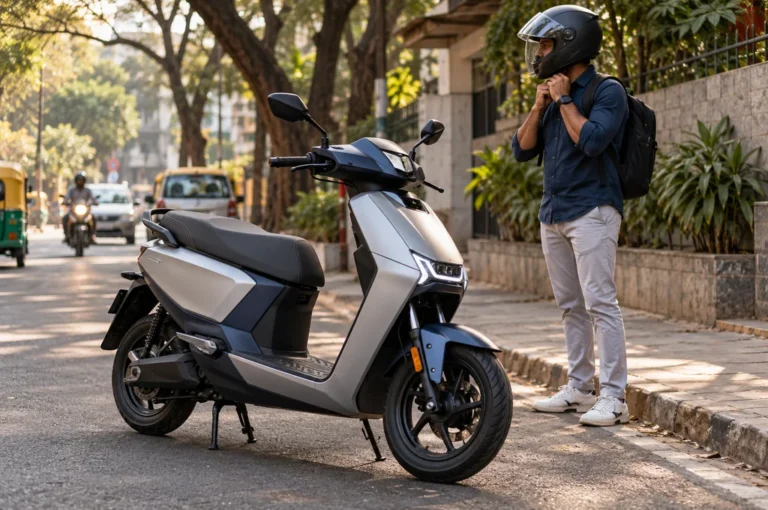
New mobility alternatives are already changing how people view small electric vehicles. From basic micro-mobility options like the River Indie Now on Flipkart: A New Path to Buy the SUV Scooter to compact crossovers, urban transportation is shrinking to fit daily realities. If Hyundai prices this vehicle competitively, rivals will have to match its value or lose market share completely.
Frequently Asked Questions
What is the Hyundai IONIQ 4?
The Hyundai IONIQ 4 is a rumored compact electric crossover currently undergoing road testing. It aims to offer an affordable entry point into Hyundai’s dedicated electric vehicle lineup.
How does the Hyundai IONIQ 4 differ from the IONIQ 5?
The IONIQ 4 features a smaller exterior footprint, a lighter curb weight, and a lower price tag. It will likely utilize a 400-volt charging setup instead of the more expensive 800-volt architecture.
Could the spotted prototype be an IONIQ 1 instead?
Yes, spy photographers have raised the possibility that this mule represents a European-focused IONIQ 1. However, its overall proportions point toward a global B-segment crossover named the IONIQ 4.
What battery range can drivers expect from the IONIQ 4?
Analysts predict a range between 200 and 240 miles on a single charge. This balance preserves daily utility while keeping production costs and pack weight under control.
Will the Hyundai IONIQ 4 support ultra-fast charging?
To cut manufacturing costs, Hyundai may skip the 800-volt hardware used on the IONIQ 5. The car will likely max out at standard 100 kW to 150 kW DC fast chargers.
What battery chemistry will Hyundai use?
Hyundai will likely select lithium iron phosphate (LFP) cells for the entry-level trim. Higher trims could receive conventional nickel-manganese-cobalt batteries for colder climates.
When will the Hyundai IONIQ 4 hit the market?
Industry watchers anticipate a formal reveal in late 2025 with commercial deliveries starting in 2026. Prototypes are still in early camouflage testing stages.
What is the expected starting price for this compact EV?
The vehicle is projected to start between $30,000 and $34,000 before regional tax incentives. This positioning directly targets affordable entry-level combustion crossovers.
Where will Hyundai build the IONIQ 4?
Production is expected in South Korea, with potential localized assembly in Europe or North America to secure regional EV incentives.
Does the test mule show traditional mirrors or digital cameras?
The captured prototypes show standard physical side mirrors. Hyundai is avoiding expensive digital camera mirrors on this model to keep retail prices affordable.
Final Thoughts on the Hyundai IONIQ 4
The compact Hyundai IONIQ 4 proves that the automotive industry is finally moving toward sensible, everyday efficiency. As real-world testing continues, this small crossover could redefine value for mass-market electric travel.
Source: Electrek (electrek[dot]co)