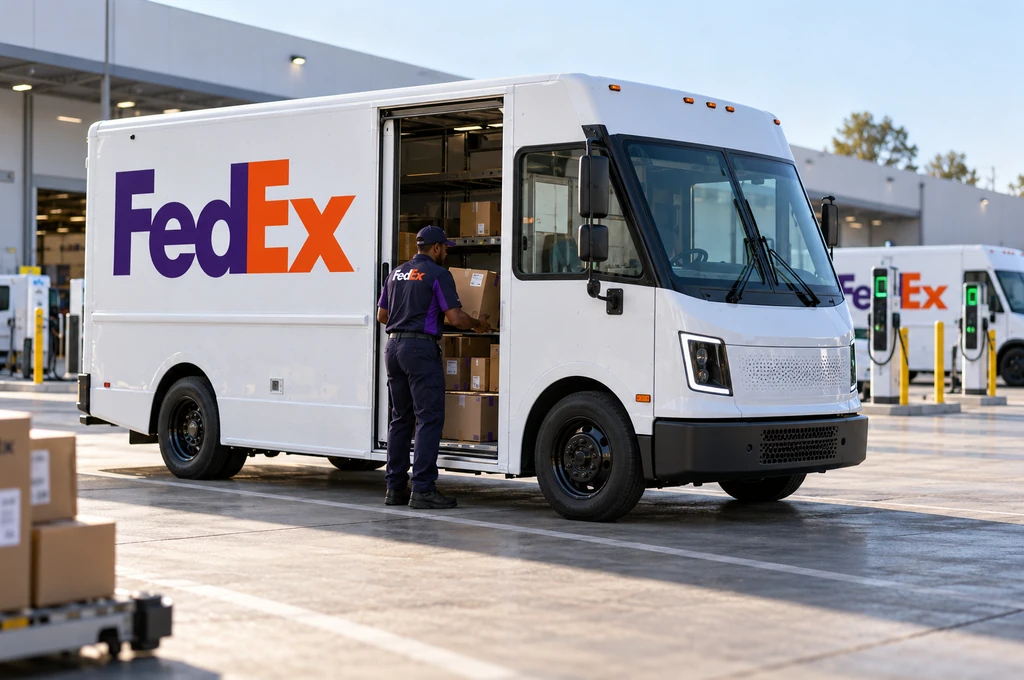
FedEx electric trucks are set to transform corporate delivery fleets after the shipping titan committed over $300 million to purchase 2,000 all-electric commercial vehicles. The direct agreement with California-based startup Harbinger aims to eliminate $800 million in diesel expenditures across the operational lifespan of the vehicles. Commercial shipping is an unforgiving business where thin operating margins dictate corporate strategy. By securing these battery-electric chassis, FedEx is making an aggressive bet on long-term capital efficiency.
Reports published by electrek[dot]co confirm that this procurement represents the largest single commercial contract for Harbinger to date. Fleet managers across North America are watching the rollout closely. Diesel prices remain volatile, and routine engine maintenance drains corporate cash reserves every quarter. Cutting fuel reliance changes the baseline balance sheet for global delivery operations.
FedEx Electric Trucks: Key Highlights & Market Impact
The scale of this commercial commitment speaks volumes about corporate transport priorities. The deployment of FedEx electric trucks marks a decisive shift away from internal combustion power in urban parcel logistics. Harbinger designs its medium-duty electric chassis specifically for delivery cycles that involve constant start-stop traffic, a use case where conventional diesel engines suffer terrible fuel efficiency.
| Operational Metric | Traditional Diesel Fleet | Harbinger Electric Fleet |
|---|---|---|
| Upfront Unit Cost | Lower ($80,000 – $110,000) | Higher ($150,000 estimated) |
| Fuel & Energy Expense | High ($0.55 – $0.70 per mile) | Low ($0.12 – $0.18 per mile) |
| Powertrain Maintenance | Frequent oil, filter, and DEF cycles | Minimal moving parts, regenerative braking |
| Projected Lifetime Savings | Baseline cost center | $800 million aggregate diesel reduction |
| Target Delivery Cycle | Urban and suburban routes | Class 4 through Class 6 urban routes |
Fuel spending represents one of the largest variable costs on corporate balance sheets. Public filings at the U.S. Securities and Exchange Commission show that fuel swings routinely swing quarterly operating margins for major logistics carriers. Eliminating that variable makes cash flow forecasting far more dependable.
Detailed Breakdown: What Caused the Switch to Harbinger
Legacy manufacturers have struggled to supply electric commercial chassis at reasonable price parity. Many established truck makers retrofitted existing diesel frames with battery packs, which resulted in compromised payload capacity and awkward weight distribution. Harbinger took a different path by building a dedicated electric commercial platform from scratch.
Harbinger integrates its motor, inverter, and gearbox into a proprietary electric drive axle. This integrated engineering lowers manufacturing costs and optimizes battery placement between frame rails. Because the chassis shares dimensions with standard commercial bodies, FedEx can install its familiar walk-in delivery boxes directly onto the frame without complex vehicle modifications.
Operating costs drive this transaction. Fleet managers evaluating FedEx electric trucks focus on battery durability and regenerative brake systems. Diesel delivery vans chew through brake pads every few months in dense cities. Electric drivetrains use motor resistance to slow down, returning energy to the pack while reducing brake wear. Over several hundred thousand miles, those mechanical savings add up as fast as fuel savings.
Similar infrastructure momentum is unfolding across regional transit and utility sectors. Community programs and commercial partnerships, such as the regional initiatives detailed in Electric vehicle: What Caused Electric City EV Fair Growth?, indicate that commercial fleet charging is advancing alongside private charging networks.
What This Means for Readers & Future Outlook
This massive corporate contract proves that commercial fleet electrification does not rely on environmental goodwill. It relies on cold arithmetic. When companies project $800 million in fuel savings against a $300 million asset purchase, fleet transformation becomes common financial sense. Other global shipping and distribution companies will face competitive pressure to match these operating cost reductions.
Charging infrastructure remains the primary hurdle for large-scale deployments. Operating thousands of medium-duty electric vehicles requires megawatts of dedicated grid capacity at distribution depots. Forward-thinking companies are already developing high-throughput charging corridors, much like convenience brands expanding consumer power hubs as reported in United Dairy Farmers Adds EV Charging: A Sweet Ohio Upgrade.
The broader market response to FedEx electric trucks will test charging depot readiness and battery supply chains. As interest rates alter capital budgeting, companies look to total cost of ownership models published by sources like Investopedia to justify upfront fleet premiums. The corporate calculation is simple. High capital expenditures today mean lower operating costs tomorrow.
Frequently Asked Questions
How many electric trucks did FedEx order from Harbinger?
FedEx placed an order for 2,000 all-electric medium-duty box trucks from Harbinger. The contract is valued at more than $300 million.
Why are FedEx electric trucks expected to save so much money in diesel?
Electric drivetrains operate with higher efficiency than internal combustion engines in city delivery routes. By avoiding expensive diesel fuel and routine combustion engine maintenance, FedEx projects $800 million in lifetime operating savings.
Who is Harbinger Motors?
Harbinger is an American electric vehicle startup founded by former automotive engineering executives. The company produces specialized medium-duty electric chassis designed for commercial delivery and service fleets.
What vehicle classification are the new FedEx electric delivery trucks?
The trucks fall into the Class 4 through Class 6 commercial vehicle classifications. These weight classes represent standard walk-in parcel delivery vans and medium-duty box trucks.
When will FedEx take delivery of the Harbinger electric trucks?
Deliveries will roll out in phases across major urban service centers over several years. Initial pilot units have already undergone operational route testing.
Does this order replace the entire FedEx delivery fleet?
No, 2,000 vehicles represent a targeted percentage of the global FedEx fleet. However, operational data from FedEx electric trucks will establish benchmarks for future fleet replacement contracts.
How does regenerative braking save money on delivery vehicles?
Regenerative braking uses the electric drive motor to decelerate the vehicle, capturing kinetic energy and recharging the battery pack. This process reduces mechanical brake pad wear, lowering routine depot repair bills.
What are the main charging challenges for electric delivery fleets?
Depots must install dedicated high-power electrical transformers and smart charging management software. Charging hundreds of commercial vans simultaneously requires significant local electric utility coordination.
Are other shipping companies electrifying their delivery vans?
Yes, major logistics rivals such as Amazon and UPS have deployed thousands of custom electric vans. Commercial delivery routes with predictable daily mileage make ideal targets for battery-electric platforms.
What happens to the old diesel trucks replaced by this order?
Older diesel trucks will reach retirement age and phase out of service through auction or scrap channels. FedEx systematically retires high-mileage assets as electric units enter regional distribution centers.
Final Verdict on Commercial Fleet Electrification
The financial justification behind FedEx electric trucks demonstrates that fleet modernization is driven by operating efficiency. Spending $300 million to save $800 million in diesel creates a powerful template for commercial freight operators worldwide.
Source: Electrek (electrek[dot]co)