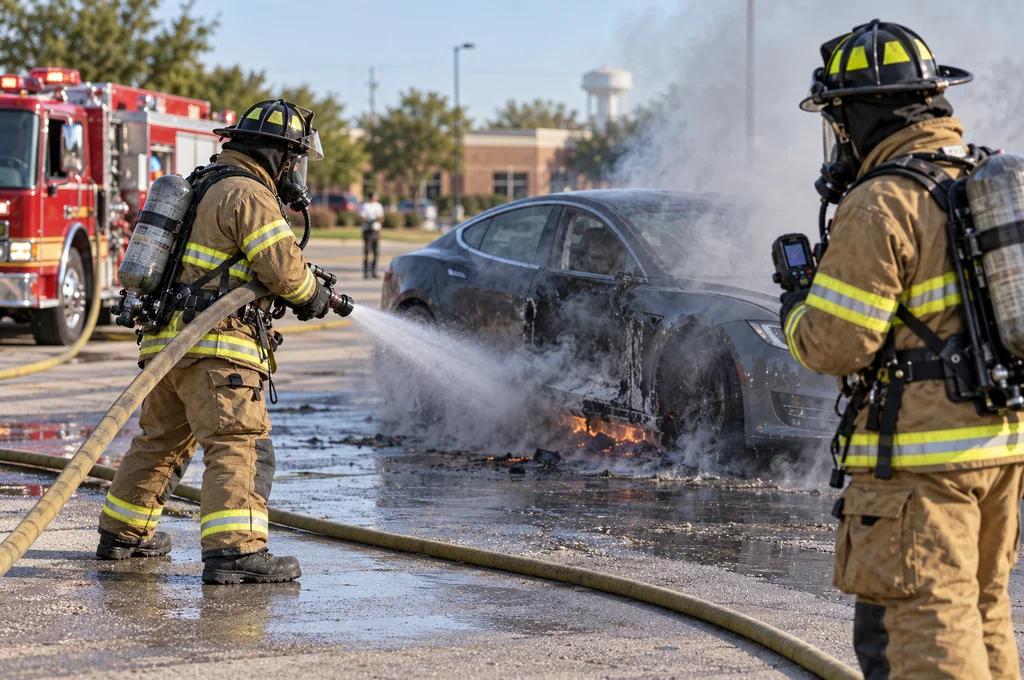
electric vehicles: Managing electric vehicle fire health risks has become an urgent challenge for emergency crews across Texas following intense battery combustions. Crews face real hazards. The Fort Worth Fire Department issued direct warnings after responding to stubborn lithium-ion incidents, noting that burning battery packs release toxic gases like hydrogen fluoride and hydrogen cyanide into the atmosphere.
First responders confront chemical exposures unlike anything seen in conventional automobile accidents. When an electric vehicle battery pack enters thermal runaway, temperatures quickly exceed 1,000 degrees Celsius. Toxic vapor clouds spread rapidly across roadways and residential garages. Local reporting from kens5[dot]com confirms that emergency medical teams must now monitor firefighters for acute respiratory distress and skin exposure long after dousing the flames.
electric vehicles: Electric Vehicle Fire Health Risks: Key Highlights & Market Impact
The Fort Worth advisory comes alongside a string of severe commercial fires nationwide. In Oklahoma, local outlets ktul[dot]com and fox23[dot]com reported that a massive blaze damaged 14 electric vehicles at a Broken Arrow dealership. That single incident required hours of continuous water application and specialized suppression tactics. These events show that electric vehicle fire health risks are not isolated anomalies. They present systemic challenges for municipal infrastructure and dealership inventory management.
Automakers face mounting pressure from safety regulators and commercial insurers. Financial data tracked by Bloomberg shows insurance premiums for high-voltage battery platforms climbing in response to catastrophic loss data. Dealerships now evaluate physical storage distances to prevent chain-reaction blazes in their vehicle staging lots. Fleet operators must adjust their yard safety protocols as well. Similar logistics overhauls occurred when transit agencies introduced electric fleets, as seen in VinFast US Electric Buses: Beyond the Ride.
The physical threat extends beyond active combustion. Runoff water mixed with toxic heavy metals poses a real threat to local storm drains. Emergency teams must contain thousands of gallons of contaminated water used to cool down burning lithium cells.
Detailed Breakdown: What Caused Thermal Runaway in Battery Packs
Battery fires happen when internal cells short-circuit, generating extreme heat that spreads to adjacent cells. This chain reaction is thermal runaway. External impact, manufacturing defects, or internal dendrite growth can rupture the microscopic separators inside lithium-ion cells. Once a single cell fails, heat cascades through the pack within seconds.
The resulting smoke contains dangerous concentrations of hydrogen fluoride, carbon monoxide, and volatile organic compounds. Water cools the outer battery casing, but the chemical reaction continues inside sealed protective shells. This makes suppression difficult. As documented by industry monitors on Investopedia, municipal service expenditures for specialized foam and deluge gear are rising steadily across the United States.
| Hazard Factor | Internal Combustion Engines (Gas) | Electric Vehicles (Lithium-Ion) |
|---|---|---|
| Primary Burn Mechanism | Liquid fuel combustion | Chemical thermal runaway |
| Water Required to Extinguish | 500 to 1,000 gallons | 3,000 to 8,000 gallons |
| Reignition Potential | Extremely low after cooling | High, can reignite days later |
| Primary Toxic Gas Hazard | Carbon monoxide | Hydrogen fluoride, nickel vapor |
| Average Suppression Time | 15 to 30 minutes | 2 to 5 hours |
The Broken Arrow dealership event demonstrated how fast heat transfers between adjacent vehicles. When one pack ruptured, radiant heat compromised neighbouring units. Firefighters had to establish wide safety perimeters to protect themselves from airborne contaminants.
What This Means for Readers & Future Outlook
Drivers and property owners must respect these hazards. Never charge an electric car with damaged cables or modified wall units. If your car suffers undercarriage damage from road debris, schedule an immediate service inspection. Hidden cell damage can smolder for hours before bursting into flames.
Understanding electric vehicle fire health risks allows owners to act swiftly during an emergency. If you detect smoke or a sweet, chemical odor coming from the floorboard, evacuate the vehicle immediately. Move at least 100 feet upwind. Alert dispatchers that the incident involves a high-voltage lithium battery so dispatchers send proper equipment.
Regulatory filings scrutinized by the U.S. Securities and Exchange Commission reveal that automakers are investing billions into solid-state battery chemistry to replace flammable liquid electrolytes. Until those cells hit mass production, cities must equip first responders with advanced breathing apparatus and battery submergence tanks. Rapid vehicle transitions in other regions show that regulatory mandates carry steep learning curves, an issue explored in Electric vehicles: Why Lagos Banned Diesel Buses. Safety codes will dictate the pace of garage installations and dealership zoning laws across every state.
Frequently Asked Questions
What toxic gases are released during an electric vehicle battery fire?
Burning lithium-ion batteries produce hydrogen fluoride, hydrogen cyanide, and carbon monoxide. These fumes cause acute lung irritation and skin burns upon contact.
Why did Fort Worth firefighters issue a warning about EV fires?
Fort Worth fire officials observed serious respiratory risks and stubborn blaze patterns while extinguishing several electric vehicle battery fires. They warned that toxic smoke presents severe health hazards to nearby crowds and emergency crews.
How much water is needed to put out an electric vehicle fire?
Firefighters often use between 3,000 and 8,000 gallons of water to cool a burning battery pack. Some extreme thermal runaway cases require more than 10,000 gallons to stop reignition.
Can an electric vehicle reignite after the fire is out?
Yes, lithium-ion battery cells can reignite hours or even days after initial suppression. Damaged internal cells hold stranded energy that can trigger secondary chemical reactions.
What happened at the Broken Arrow dealership fire?
A fast-moving fire spread across a storage lot at an Oklahoma dealership, damaging 14 electric vehicles. Emergency crews spent hours managing intense heat and toxic runoff to protect neighboring buildings.
Are electric vehicle fire health risks greater than gasoline vehicle fires?
Electric car fires release more corrosive chemical compounds like hydrogen fluoride compared to standard petrol blazes. They also burn significantly hotter and resist standard foam suppression.
What should you do if your electric vehicle starts smoking?
Pull over safely, turn off the vehicle, and evacuate immediately. Move at least 100 feet upwind and inform emergency dispatchers that a high-voltage lithium battery is smoking.
How do fire departments protect firefighters from battery smoke?
Firefighters wear full self-contained breathing apparatus and heavy protective suits during battery incidents. They undergo strict decontamination protocols to remove heavy metal residues from their turnout gear.
Can home garage sprinklers put out an electric vehicle fire?
Standard residential sprinklers can control surrounding structural flames, but they cannot extinguish thermal runaway inside an enclosed battery pack. Specialized industrial cooling volume is required.
Are new battery designs safer against thermal runaway?
Automakers are developing solid-state batteries and lithium iron phosphate chemistries that offer higher thermal stability. These upcoming battery platforms greatly reduce combustion hazards.
Final Assessment: Managing EV Battery Hazards
Addressing electric vehicle fire health risks requires better firefighting protocols, updated municipal building codes, and honest public education. Clean transportation remains an engineering priority, but keeping communities safe from toxic chemical fires demands relentless vigilance.
Source: kens5.com (kens5[dot]com)