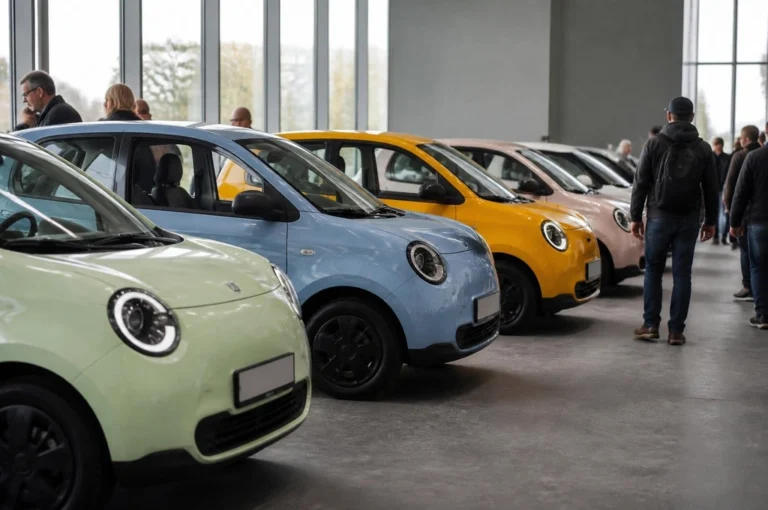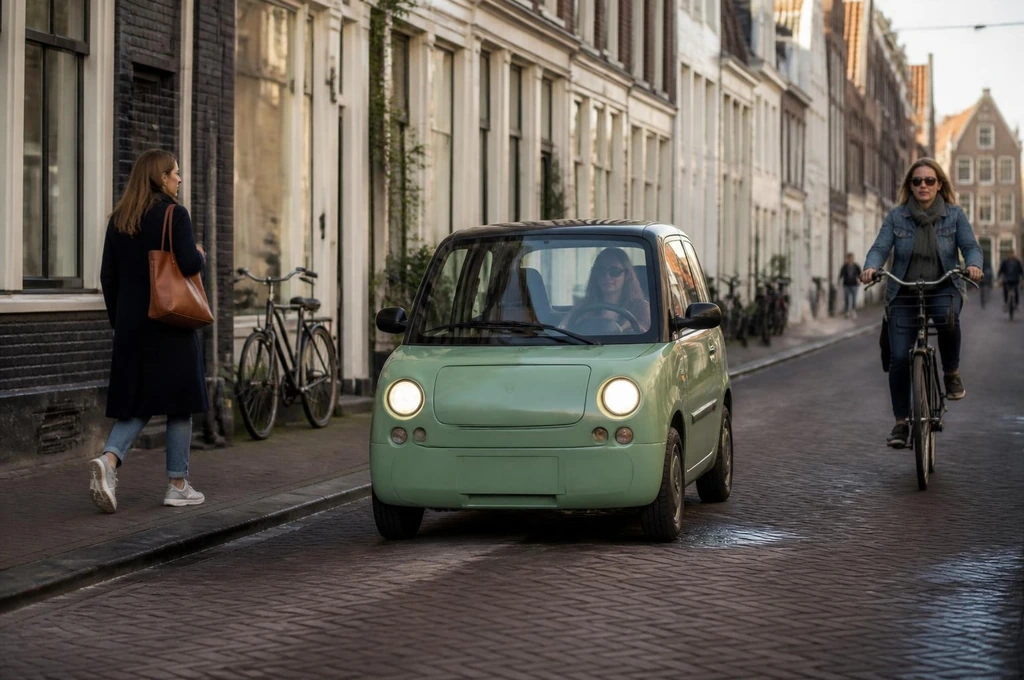
The Citroën electric 2 CV concept signals a decisive step toward genuinely cheap urban mobility, offering a concrete blueprint for a €15,000 production vehicle. Industry reporting from evsandbeyond[dot]com outlines how the French brand intends to strip away luxury weight to restore basic, democratic personal transit for European buyers.
Car buyers across Europe face a persistent barrier: modern battery vehicles cost too much money. Premium sport utility vehicles dominate manufacturer showrooms, pushing entry prices past €35,000. Stellantis, the parent firm of Citroën, wants to reset that balance. By reimagining the iconic post-war 2CV as a spartan runabout, the company tackles high battery costs directly. Financial analysts tracking industrial manufacturing trends at Bloomberg note that mass electrification cannot succeed without sub-€20,000 models.
Citroën Electric 2 CV Concept: Key Highlights & Market Impact
Citroën built its historical reputation on utilitarian engineering. The original 1948 model carried French farmers across rutted fields with minimal hardware. Today, the new concept adopts that identical design philosophy for the battery era. Instead of heavy digital displays, automated seat warmers, and motorized hatches, this car prioritizes lightness and essential function.
Engineering minimalism directly protects the bottom line. Small batteries cost less, charge faster on basic domestic sockets, and place lower strain on municipal power grids. Similar low-cost mass deployment strategies have gained traction in other developing territories, such as when Japanese EV Makers Cross 10,000 Units Mark in India by strictly controlling equipment bloat.
| Feature Category | Citroën 2CV Electric Target | Standard Modern EV Average |
|---|---|---|
| Estimated Target Price | €15,000 (approx. $16,200) | €38,500 ($41,500) |
| Battery Chemistry | Lithium Iron Phosphate (LFP) | Nickel Manganese Cobalt (NMC) |
| Target Curb Weight | Under 1,050 kg | 1,750 to 2,200 kg |
| Estimated Range | 180 to 220 km (City/Mixed) | 380 to 520 km (WLTP) |
| Interior Focus | Smartphone dock, wash surfaces | Triple-screen digital consoles |
Market reaction to the targeted price point reflects deep consumer fatigue with inflated car loans. When automakers strip away redundant software suites, production costs plunge. Corporate filings reviewed on U.S. Securities and Exchange Commission databases reveal that traditional carmakers suffer narrow operating margins on small EVs unless they re-engineer chassis architectures from scratch.
Detailed Breakdown: What Caused the Push for Budget EVs
Two distinct economic forces created this aggressive shift toward cheap runabouts: Chinese market expansion and regulatory emission targets. Import tariffs buy European legacy brands temporary breathing room, but Chinese manufacturers continue shipping capable, inexpensive hatchbacks into western ports. Independent automotive reports gathered by Reuters indicate that western brands must field viable sub-€20,000 models or surrender entry-level market share completely.
Citroën chose a pragmatic technical path. The vehicle relies on lithium iron phosphate chemistry rather than energy-dense nickel cells. LFP chemistry avoids expensive cobalt, tolerates daily 100 percent charging cycles, and offers longer mechanical lifespans. The packaging also keeps structural cooling hardware light. Fleet charging logistics become manageable even on standard street connectors, avoiding the expensive high-output megawatt infrastructure projects seen when VinFast US Electric Buses: Beyond the Ride deploy commercial fleets.
Cost reductions extend to the cabin. Passengers use their personal mobile devices for satellite navigation, climate monitoring, and audio playback. Removing heavy built-in computer units cuts harness wiring, microchips, and dashboard assembly labor. The resulting weight reduction allows Citroën to install a modest 30 kWh battery pack without sacrificing city driving autonomy.
What This Means for Readers & Future Outlook
Urban commuters stand to gain immediate financial relief if this concept reaches dealer networks without major corporate compromises. Daily operating costs for lightweight vehicles remain fractional compared to combustion equivalents. Basic home charging provides sufficient range for routine grocery runs, local work commutes, and school drop-offs.
Public charging networks must adapt as well. High-speed highway corridors satisfy intercity travelers, but suburban districts require ubiquitous AC destination posts. Retail locations increasingly install convenience chargers, a shift reflected when United Dairy Farmers Adds EV Charging: A Sweet Ohio Upgrade demonstrated how community hubs serve everyday drivers. If Citroën delivers this car near the promised €15,000 figure, city transport across Europe could finally break free from luxury pricing barriers.
Frequently Asked Questions
What is the expected price of the Citroën electric 2 CV concept production car?
Citroën targets a starting base price of around €15,000 for the production model. This price point aims directly at urban commuters seeking an affordable zero-emission alternative.
What battery technology will power the production car?
The model will use Lithium Iron Phosphate battery cells. This chemistry cuts production costs, uses no cobalt, and provides durable thermal stability for daily city driving.
What driving range does the vehicle target?
The car targets a mixed urban driving range between 180 and 220 kilometers on a single charge. That distance comfortably covers routine daily commuting without requiring a heavy, expensive battery.
Why is Citroën reviving the 2CV nameplate for this project?
The original 2CV represented simple, affordable transport for working people across Europe. Citroën uses that historical spirit to build an unpretentious, functional electric vehicle for price-conscious drivers.
Does the Citroën electric 2 CV concept include luxury interior screens?
No, the concept replaces heavy proprietary touchscreens with an integrated smartphone mount. Drivers run navigation, radio, and communication through their own connected mobile devices to lower manufacturing costs.
When could the production version go on sale in Europe?
Industry expectations point to an official production rollout within the next two to three years. Final timing depends on factory tooling schedules and battery supply contracts across the Stellantis group.
Can this vehicle charge on regular household wall sockets?
Yes, its smaller battery pack recharges easily on basic domestic power connections and standard AC wall boxes. It eliminates the strict requirement for expensive high-output DC fast chargers for daily use.
How does this model compare to Chinese budget EVs?
Citroën aims to match the low price tag of imported Chinese micro-EVs while assembling the car within European trade borders. This strategy avoids costly import tariffs and regulatory roadblocks.
Is the car intended for long motorway journeys?
The car is built primarily for urban, suburban, and rural local roads rather than long highway trips. Its modest top speed and compact battery prioritize daily efficiency over high-speed touring.
Will this budget EV be sold in North America?
Stellantis currently focuses this project on European and select emerging markets where small city hatchbacks are popular. There are no confirmed plans to sell this model in North America.
Citroën Electric 2 CV Concept: A Return to Pragmatic Motoring
The Citroën electric 2 CV concept proves that the future of personal transit does not belong solely to heavy, overpriced luxury crossovers. By combining lightweight design, cobalt-free batteries, and minimalist interiors, Citroën can deliver true democratic mobility at a realistic €15,000 price point.
Source: EVs & Beyond (evsandbeyond[dot]co[dot]nz)