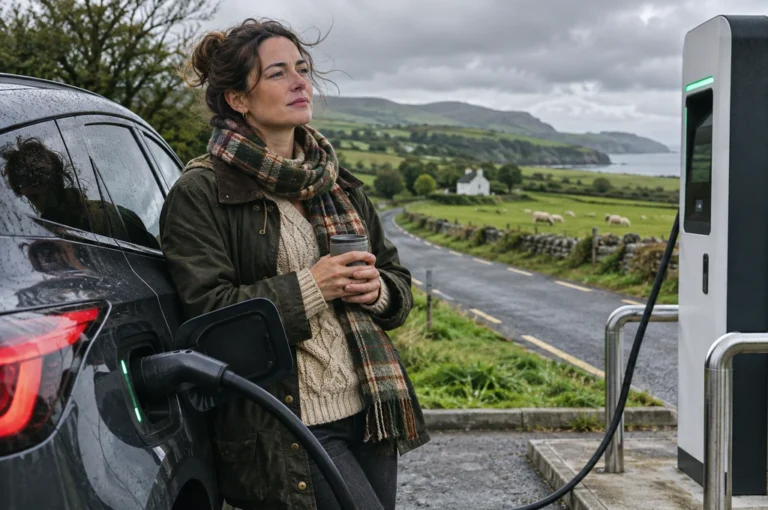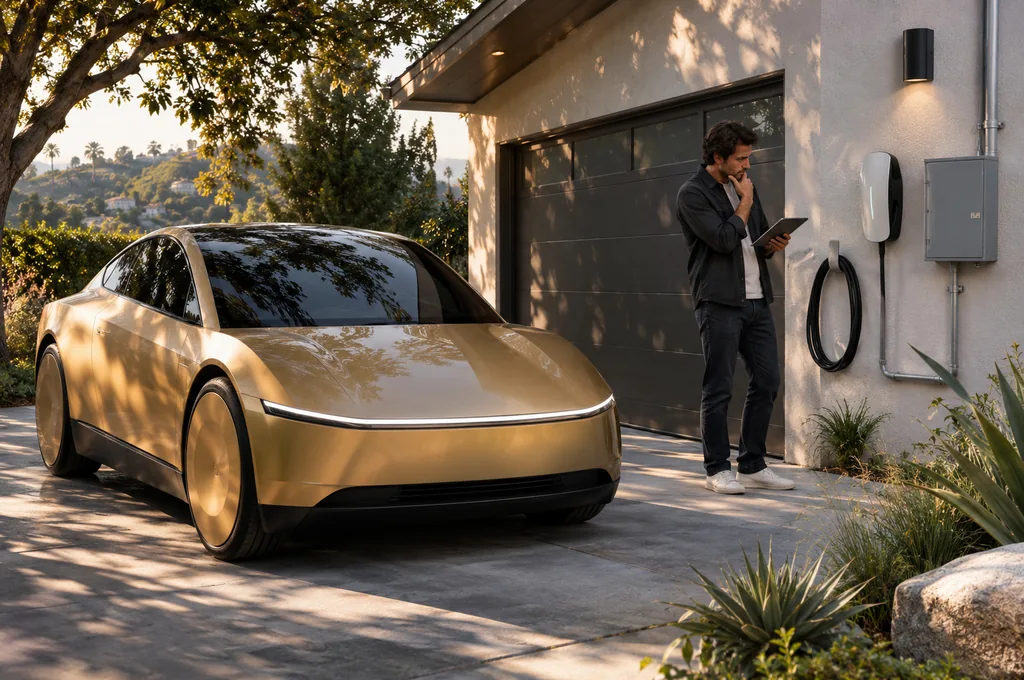
The Tesla Cybercab home charging debate is heating up. The car cannot be plugged into a standard wall outlet. The architecture is fundamentally different from any vehicle sold before it. This creates a massive friction point for potential owners. It forces a complete rethink of the daily driving routine. Here is why this matters for your wallet and your lifestyle.
⚡ Quick AI Overview & Key Recommendation
The Tesla Cybercab cannot use standard home charging cables. It requires high-voltage DC fast charging stations. Owners must rely on a network of chargers, not a garage outlet. This changes running costs and daily convenience. Consider the total cost of ownership and charging access before buying.
Tesla Cybercab Home Charging: Core Evaluation Framework & Decision Matrix
The lack of a plug changes the ownership model completely. Standard EVs use an AC cable plugged into a wall box. The Cybercab does not have an AC inlet. It lacks the onboard chargers needed for slow charging. This is a structural limitation, not a software fix.
Let’s break down the reality of this decision matrix. You are choosing between a standard EV experience and a robotaxi model.
| Feature | Standard Tesla EV | Tesla Cybercab |
|---|---|---|
| Home Charging | Yes, via standard cable or wall box | No, requires high-voltage DC station |
| Charging Speed | 3-11 kW (slow to medium) | 250-500 kW (extremely fast) |
| Cost to Charge | ~$0.10 – $0.15 per kWh | ~$0.20 – $0.40 per kWh (high-voltage) |
| Ownership Role | Personal commuter vehicle | Rental/Robotaxi unit |
This table exposes a hard truth. The Cybercab is not a car you keep in your garage. It is a machine designed to work 24/7. It needs high-voltage energy to operate quickly between fares. This model is closer to a commercial appliance than a personal vehicle.
Real-World Calculations: Running Costs, Range & Government Subsidies
Running a vehicle without home charging is expensive. You lose the cheapest source of electricity. Residential rates are significantly lower than public fast-charging rates. Public DC chargers often charge a premium for the convenience and speed.
Here is a rough calculation of the impact. A standard home charge might cost $10 for a full battery. A public DC fast charge for the same range could cost $25 or more. That is a 150% markup on your energy bill.
Furthermore, range anxiety is a real concern. If you cannot charge at home overnight, you must plan every trip around a charging station. The Cybercab aims for long range, but the lack of a home plug makes it difficult to top up during the day. Government subsidies often favor vehicles with home charging capabilities. You should check if the Cybercab qualifies for the same incentives as standard EVs.
Consider the broader market. Companies like Tesla vs BYD: Examining EV Valuations, Cash Burn, and Real-World Value highlight the importance of cost efficiency. The Cybercab must generate revenue to offset its high charging costs. This limits its utility for a personal commuter.
Crucial Factors & What to Check Before You Buy
If you are still interested in the Cybercab, you need a strict checklist. Do not buy this vehicle based on the promise of future tech. The hardware is already defined.
First, verify your local charging infrastructure. You need access to a high-voltage station near your home. If you do not have one, the Cybercab is useless to you.
Second, understand the service model. This car is not for you to drive. It is for you to own as an asset. You must rely on the Tesla network to manage it. This creates dependency. You cannot fix a flat tire yourself if the software locks you out.
Finally, compare the total cost. The purchase price of a Cybercab is expected to be high. Add the cost of charging it at public stations. Compare this to the cost of a used standard Tesla Model 3 or Y. The Model 3 is a proven, reliable, and fully functional personal vehicle. It charges at home. It fits your lifestyle.
Do not let the futuristic vision blind you to the practical limitations. The inability to charge at home is a dealbreaker for most consumers.
Frequently Asked Questions
Can the Tesla Cybercab charge at home?
No, the Tesla Cybercab cannot be charged at home using a standard wall outlet or cable. It requires high-voltage DC fast charging infrastructure.
How does the Tesla Cybercab charging cost compare to standard EVs?
Charging a Cybercab at public high-voltage stations is generally more expensive than charging a standard EV at home, which uses residential rates.
Why doesn’t the Tesla Cybercab have a home charging port?
The Cybercab is designed as a robotaxi unit. It relies on fast DC charging to stay operational between fares, making a slow home charging port unnecessary.
What type of charger does the Tesla Cybercab need?
It requires a high-voltage DC fast charging station, not a standard AC Level 1 or Level 2 charger used by most electric cars.
Is the Tesla Cybercab suitable for personal use?
Most analysts suggest the Cybercab is not suitable for personal use. It is designed to operate autonomously as a rental or service vehicle.
Can I plug a Tesla Cybercab into a Tesla wall connector?
No, the Tesla wall connector is a Level 2 AC charger. The Cybercab lacks the internal hardware to accept this type of charge.
Where can I charge a Tesla Cybercab?
You can only charge a Tesla Cybercab at designated high-voltage DC fast charging stations located in public areas.
Does the lack of home charging affect the resale value?
Yes, the lack of home charging could negatively impact resale value, as it limits the car’s utility to a very specific, niche market.
Is the Tesla Cybercab eligible for government EV rebates?
Rebate eligibility depends on local government policies. You should check with your state or local transportation department for current rules.
What are the running costs of owning a Tesla Cybercab?
Running costs are higher due to the reliance on public fast charging, which is significantly more expensive than charging at home.
The Bottom Line: Is the Tesla Cybercab Right for You?
The Tesla Cybercab home charging reality is simple: it does not exist. This fact changes everything about the car’s value proposition. If you value convenience and low running costs, this vehicle is not for you. The future of mobility is exciting, but it comes with trade-offs.
Source: CarsDirect (carsdirect[dot]com)